

Moving with a car: What fits in the trunk – and when do you need professionals?
Moving with a car: What really fits in the trunk?
Not every move immediately requires a van or a moving company. Especially with shared apartments, single households, or gradual moves, many are surprised how much you can actually fit in the trunk.
In this article, we practically show you which vehicle types are suitable for which kind of move, which typical moving items fit inside – and when a professional moving company makes more sense. For orientation, we link to average trunk dimensions by vehicle class on kofferraum.org.
What types of moves are there anyway?
Before discussing vehicle types, a realistic assessment of the move helps:
- Shared apartment / student move: Clothes, books, small desk, chair, household boxes.
- Single move (studio apartment): Boxes, bed (disassembled), small wardrobe, electronic devices.
- Couple / 2–3 rooms: many boxes, larger furniture, mattresses, household appliances.
- Family move: complete furnishings, bulky furniture, appliances – usually no longer practical with a car.
The smaller and more modular the household, the more likely a car will suffice – at least for a large part of the move.
Basics: Transporting moving goods properly in the car
- Boxes are your friend: Uniform boxes stack better than loose items.
- Heavy items on the bottom: Books, folders, devices first, light ones on top.
- Fold down the rear seats: Often doubles the usable loading space.
- Disassemble furniture: Always take apart table legs, shelves, bed frames.
- Secure instead of stacking: Better to load less but slip-proof.
Moving by vehicle type: What realistically fits inside?
Small car – the underestimated helper
Small cars are surprisingly suitable for very small moves or multiple trips.
Typical moving items:
- 6–10 moving boxes
- Clothes, bedding
- Small desk chair
- TV, monitor, printer
Suitable for: Shared apartments, students, partial moves.
Hatchback – flexible thanks to large tailgate
Hatchback vehicles offer advantages over sedans due to the large opening.
Typical moving items:
- 10–15 boxes
- Shelves (disassembled)
- Desk top
- Mattress (depending on size)
Suitable for: Shared apartments and small single moves.
Sedan – volume available, opening limited
With the sedan, the trunk is often large but the opening is small.
Typical moving items:
- Many boxes
- Books, files, clothes
- Kitchen appliances
Limitation: Bulky furniture rarely fits.
Station wagon – the classic for small moves
A station wagon is for many the ideal compromise between everyday use and moving.
Typical moving items:
- 15–25 moving boxes
- Bed (disassembled)
- Chest of drawers, TV stand
- Chairs, small tables
Suitable for: Single apartments, smaller households.
SUV & compact SUV – lots of height, often less length
SUVs and compact SUVs offer a lot of height but not always maximum depth.
Typical moving items:
- 12–20 boxes
- Household appliances (washing machine only rarely)
- Mattresses, small sofa elements
Van – almost a small transporter
Vans are ideal when you want to transport a lot at once.
Typical moving items:
- 25–40 boxes
- Bed, sofa (disassembled)
- Large wardrobes (partially disassembled)
- Washing machine, refrigerator
Transporter & pickup – move light to complete
Transporters and pickups are the bridge to the professional solution.
Typical moving items:
- Complete household furnishings
- Sofas, wardrobes, beds
- Large appliances
Average trunk dimensions by vehicle type
The following gallery shows average trunk dimensions of various vehicle classes – helpful to realistically estimate what fits in the car during a move.
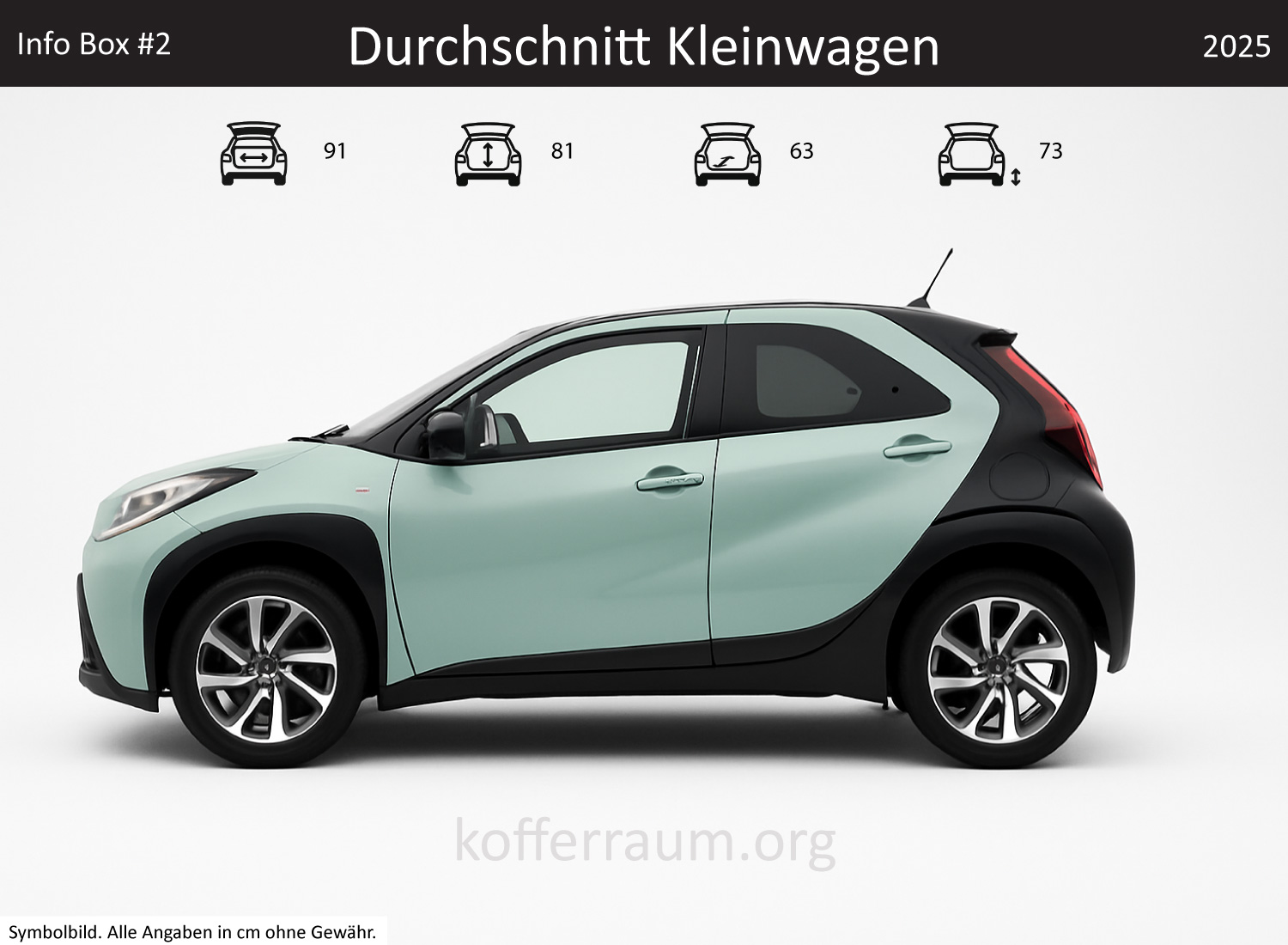
Small car – suitable for boxes, clothes, and small furniture.
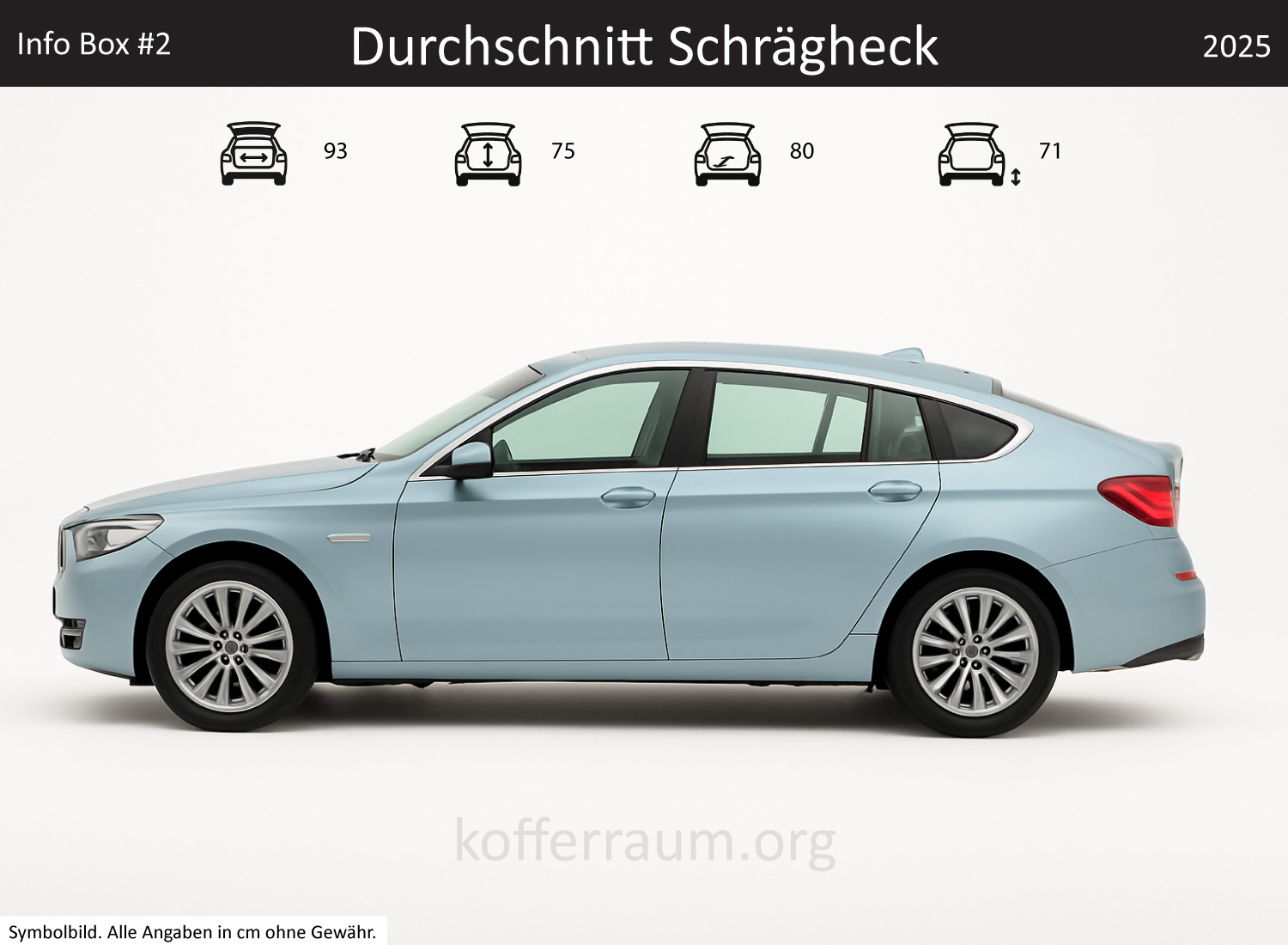
Hatchback – flexible thanks to large tailgate.
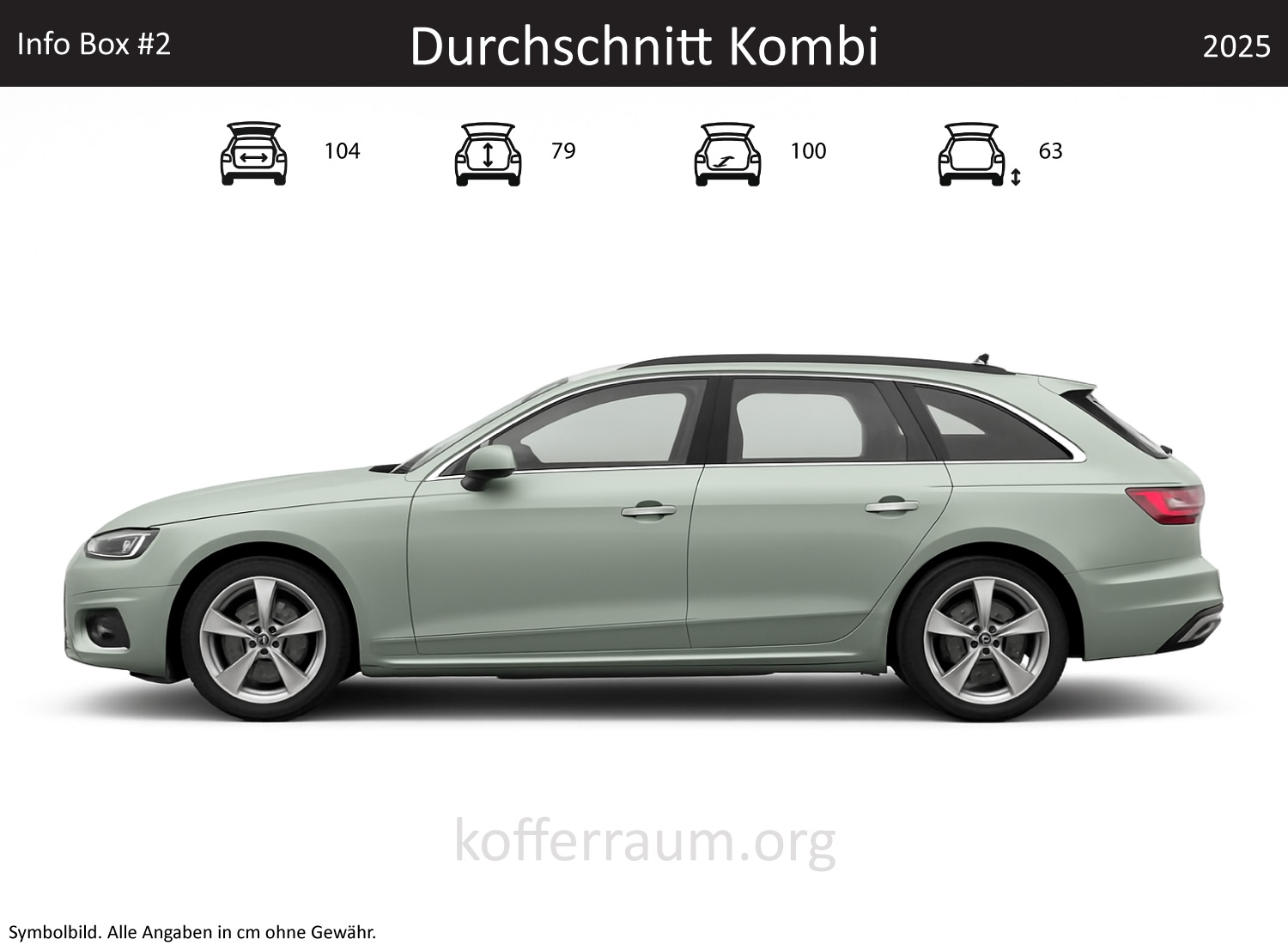
Station wagon – one of the best all-rounders for small moves.

SUV – note lots of height, limited depth.
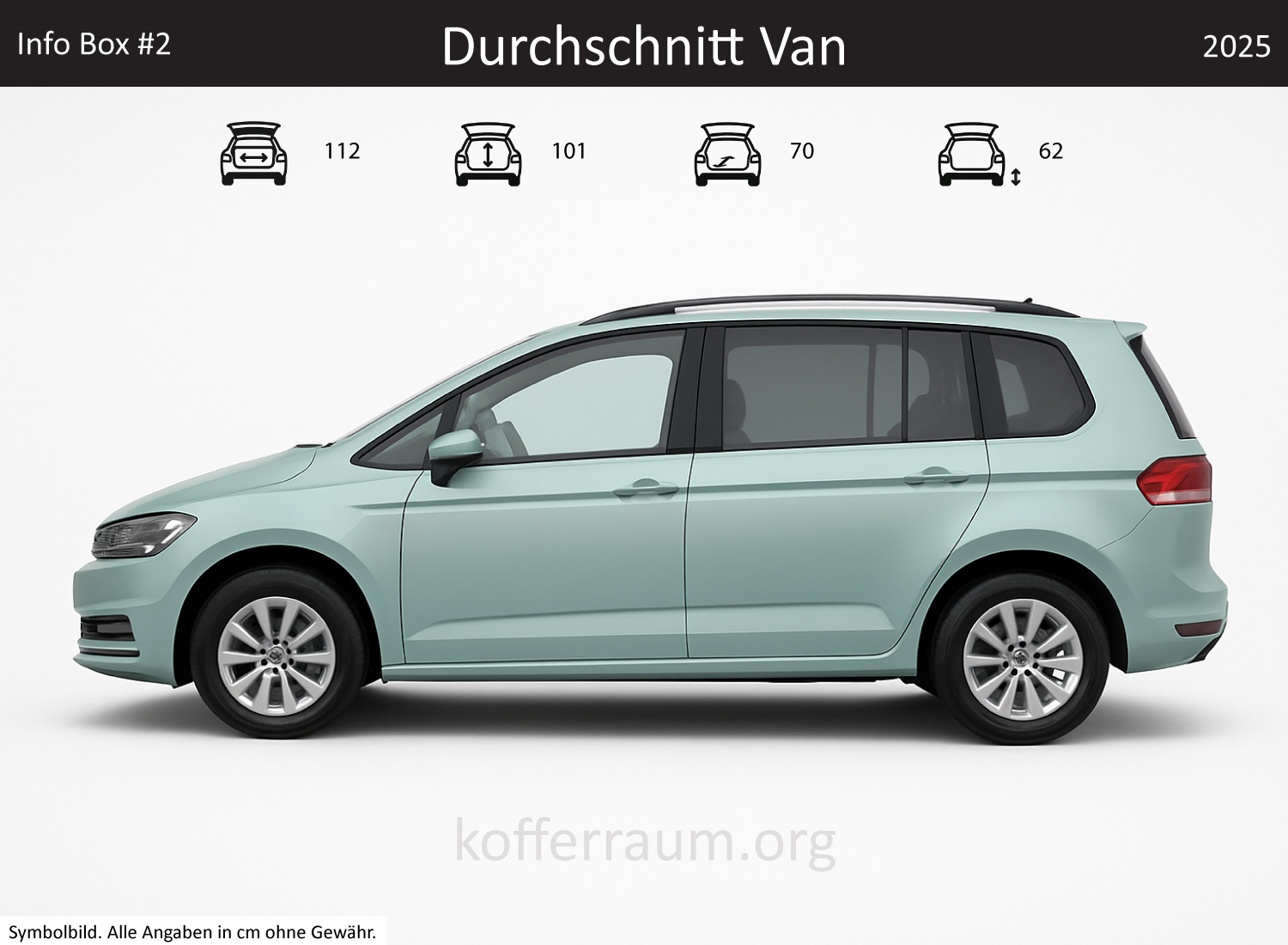
Van – ideal for more extensive moves without a moving company.
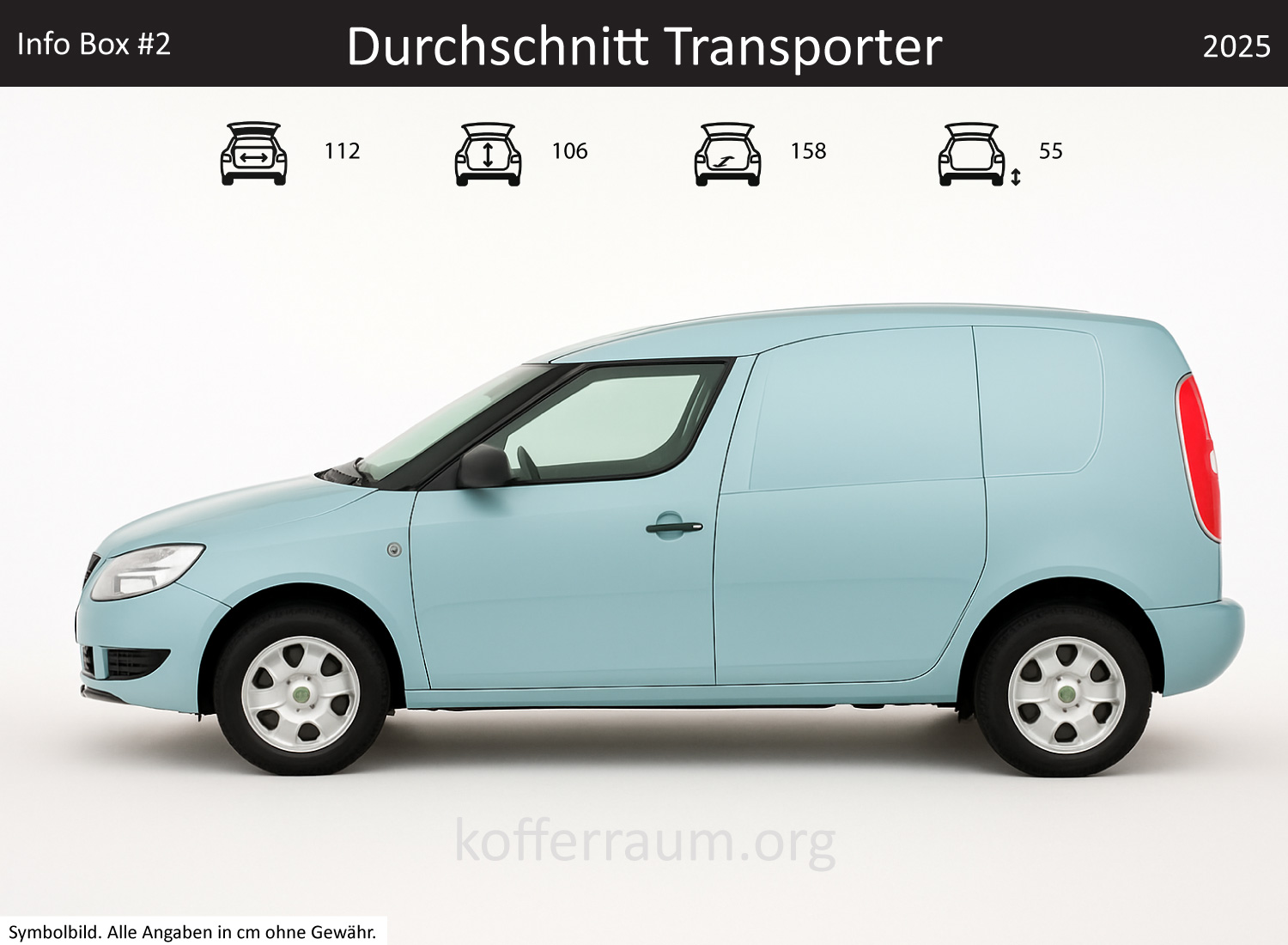
Transporter – almost complete household moves possible.
Conclusion: Often more fits in the trunk than you think
Many moves can be managed fully or partially with your own car – especially with shared apartments, singles, or gradual relocations. Station wagons, vans, and even hatchbacks regularly surprise with their space.
At the same time, when heavy furniture, time pressure, or multiple floors without an elevator come into play, a professional moving company is often the less stressful and in the long run even more cost-effective solution.
The art lies in realistically assessing what you can handle yourself – and what is better outsourced.