
Home » Trunk dimensions » Chrysler
Chrysler — trunk dimensions
5 models
-
 Town & Country Minivan
 -
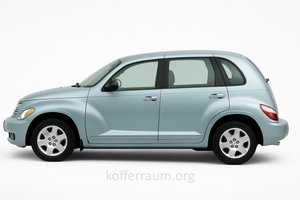 PT Cruiser Hatchback
 -
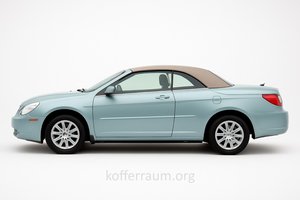 Sebring Convertible Convertible
 -
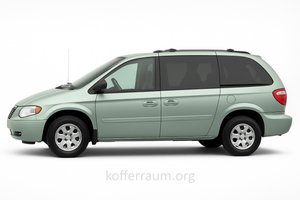 Voyager LX Minivan
 -
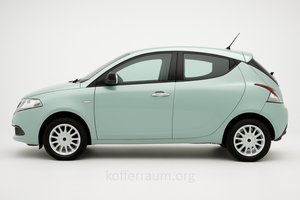 Ypsilon Hatchback
About Chrysler
Chrysler is an American automotive brand with a turbulent history: founded in 1925 by Walter P. Chrysler as a technically ambitious alternative to Ford and General Motors. In its early decades, Chrysler made a name for itself through innovations such as hydraulic brakes, air suspension, and the early use of powerful engines. The brand's hallmark has always been the combination of comfort, technology, and a distinctive design approach — not pure luxury like Cadillac, but more sophisticated than simple mass-market brands.
The post-war years and the 1950s solidified the image: the Chrysler "Letter Series" became icons, combining performance ambition with American generosity. In the 1930s, the Airflow was a bold aerodynamic advance; later, large V8 engines and opulent interiors shaped the brand image. In the 1980s and 1990s, Chrysler repositioned itself, including through new developments in the van segment. The introduction of the Voyager and Town & Country laid the foundation for Chrysler's success with family customers — the brand was a leader in practicality and space concepts.
Among the best-known models of recent times are the Chrysler 300, which from 2004 revived the tradition of powerful sedans in a modern guise, and the PT Cruiser, which gained surprising market share in the early 2000s with retro design and high utility. The Pacifica replaced the Town & Country and set a benchmark as a modern family van with a plug-in hybrid variant, emphasizing efficiency and technology. Technical highlights like the Hemi V8, as well as early automation and comfort features, are part of the brand's identity.
Chrysler went through numerous corporate changes: the merger with Daimler (1998–2007), acquisition by Cerberus, and later the alliance with Fiat, which ultimately resulted in the merger into Stellantis (2021). These changes significantly influenced product policy, quality, and brand strategy. In recent years, Chrysler has suffered from unclear positioning: a comparatively small portfolio, shifting target groups, and a weaker dealer network led to declining sales.
The brand's strengths remain in comfort, space concepts, and the ability to occupy niches (e.g., practical vans and large sedans). The Pacifica is a positive example: family-friendly, technologically modern, and competitive as a hybrid. The 300 demonstrates that Chrysler can still show character — powerful, American, with a distinctive presence.
Weaknesses include a lack of breadth in the model lineup, unclear positioning between premium and mainstream competitors, and public perception of quality and service. Without a clear product portfolio and convincing technology strategies, the potential remains limited.
Outlook: Under Stellantis, Chrysler faces a reorientation. The goal of electrifying the brand more strongly and positioning it as an upscale American alternative has been stated. Success depends on whether Chrysler can build a clear, recognizable identity — focused, technologically relevant, and with products that appeal emotionally while delivering everyday utility. In the short term, Chrysler remains a niche brand; in the long term, a fresh start with electrified model ranges is the most plausible chance to regain visibility and relevance.