
Home » Trunk dimensions » Suzuki
Suzuki — trunk dimensions
14 models
-
 Across Sedan
 -
 Baleno Hatchback
 -
 Celerio Hatchback
 -
 Grand Vitara SUV
 -
 Ignis Subcompact car
 -
 Ignis Hybrid Subcompact car
 -
 Jimny SUV
 -
 Kizashi Sedan
 -
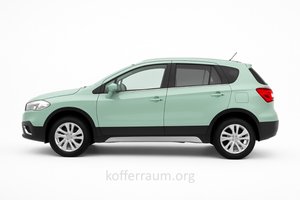 SX4 S-Cross SUV
 -
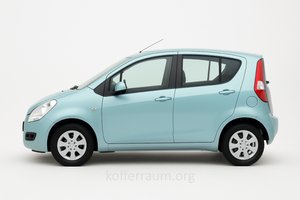 Splash Hatchback
 -
 Swace Hybrid Wagon
 -
 Swift Subcompact car
 -
 Swift Hybrid Subcompact car
 -
 Vitara SUV
About Suzuki
Suzuki is a brand that is often underestimated — not because it has little to offer, but because its strengths are pragmatic and unpretentious. Founded in 1909 by Michio Suzuki, the company started with looms and entered motor vehicle production after World War II. Early on, the focus was on compact, affordable, and reliable vehicles; a philosophy that continues to shape the company today.
Core Competency: Compact Vehicles
Suzuki has specialized particularly in small cars, compact SUVs, and commercial vehicles. Models like the Swift, Ignis, Baleno, and Vitara demonstrate how the company combines interior space, driving enjoyment, and low running costs. The Suzuki Swift is exemplary for the brand: light, agile, economical, and clearly focused on everyday usability. The Jimny, on the other hand, expresses robustness and off-road character — a compact SUV that offers a lot of driving fun despite simple technology.
Market Position and Production
Suzuki is especially strong in Asia — foremost in India. Maruti Suzuki dominates the market there and is an important pillar for Suzuki’s global orientation. The production strategy focuses on local manufacturing, cost-efficient platforms, and high parts commonality. This model allows competitive pricing and quick adaptation to regional needs.
Technology and Efficiency
Technically, Suzuki relies on lightweight construction, efficient combustion engines, and pragmatic drivetrain architectures. Downsized turbo engines, mild hybrid systems, and optimized transmissions are part of the range, with the brand focusing less on highly complex electrification solutions and more on practical, cost-effective technologies. The result is vehicles with low fuel consumption, low maintenance costs, and reliable mechanics — qualities appreciated by buyers in many markets.
Motorsport and Image
Suzuki also has a motorsport tradition, especially in rally and motorcycle sectors. Motorsport primarily serves not as marketing but as a testing ground for technology and reliability. The insights gained flow into production models and strengthen the image as a robust, driver-focused brand.
Challenges and Future
The biggest challenge for Suzuki is the accelerated shift to electric mobility. While competing manufacturers are investing heavily in battery electric vehicles, Suzuki pursues a cautious course: partnerships — for example with Toyota — are intended to provide know-how and platforms to realize cost-efficient hybrid and electric models. For many markets, the central question remains how Suzuki can offer affordable electric mobility without compromising the core values of price, reliability, and functionality.
Conclusion
Suzuki is not a luxury brand, nor does it want to be. Its strength lies in practical, well-thought-out vehicles for everyday use: economical, reliable, and often surprisingly fun. For buyers seeking functional mobility at reasonable costs, it is one of the best addresses. The future will show how well the brand manages the transition to electric mobility — the potential is there, but execution remains the decisive factor.