
Home » Trunk dimensions » Tesla
Tesla — trunk dimensions
4 models
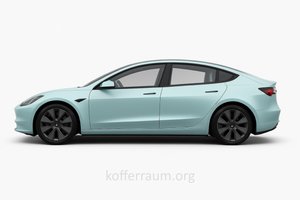
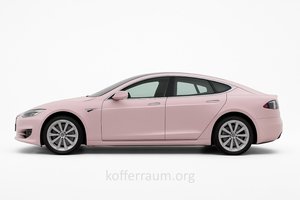
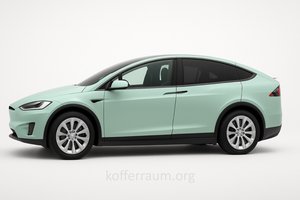
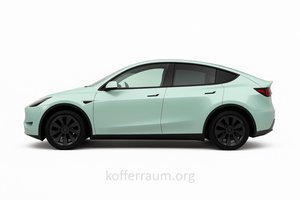
About Tesla
Tesla brought electric mobility from a niche market to the mass market, changing not only cars but the entire business model of the industry. Founded in 2003 and with Elon Musk as its prominent face since the mid-2000s, the brand stands for a combination of long range, rapid acceleration, software-centered operation, and an aggressive expansion of its own production and charging networks. Tesla is less a traditional car brand and more a technology company on wheels — which shapes both its strengths and weaknesses.
On the product side, Tesla started with the Roadster as an image product, established the Model S as an electric luxury sedan, and expanded the lineup with the Model X (SUV), Model 3 (compact, high-volume bestseller), and Model Y (crossover). The vehicles are characterized by large battery capacities, high efficiency, and a driver-focused HMI philosophy: few physical buttons, a large central touchscreen, regular over-the-air software updates, comfort improvements, and sometimes performance enhancements. Direct sales, app-centric operation, and the Supercharger network are integral parts of the customer experience.
Technically, Tesla has pioneered several areas: battery optimization, thermal management, range calculation, and the integration of driver assistance systems. Autopilot and the paid Full-Self-Driving package are the most visible results of this development. While driver assistance features can ease daily driving, the testing and communication of these systems have repeatedly faced criticism — safety authorities demand clear limits, and expectations for autonomous operation remain high and controversial.
Another cornerstone is vertical integration: Gigafactories, in-house cell development (e.g., 4680 cells), proprietary software development, and a global fast-charging network aim to create independence and secure economies of scale. The energy division — battery storage and solar products — complements the electric vehicle strategy and positions Tesla as a full-service provider for sustainable energy use.
At the same time, Tesla represents some permanently debated issues. Quality control and build quality vary depending on the factory and model year; some customers find service and spare parts processes insufficient, especially in regions with rapid fleet growth. The company's communication, strong personalization through a single leader, and legal disputes around advertising claims and autonomy functions repeatedly lead to criticism and regulatory pushback.
From a market perspective, Tesla has accelerated the industry: established manufacturers have been made aware of the need for electric platforms and battery capacities, new competitors are entering the market, and consumer demand for electric alternatives has grown significantly. Future challenges include scaling production with consistent quality, profitable growth in new segments (e.g., commercial vehicles, more affordable mass-market models), and achieving genuine autonomous driving capability under regulatory requirements.
In summary: Tesla remains a driver of automotive transformation — innovative, polarizing, and market-dynamic. For customers, this often means cutting-edge technology and strong range; for the industry, Tesla is both a catalyst and a benchmark. The coming years will show whether Tesla can translate its technological leadership into stable, widely accepted products and processes.