
Trunk comparison: Audi A3 Sportback vs BMW 3 Series Touring
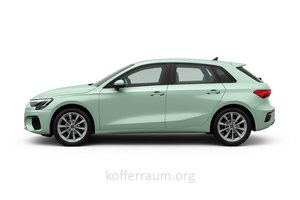
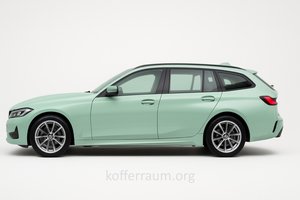
Biggest Differences (>10%)
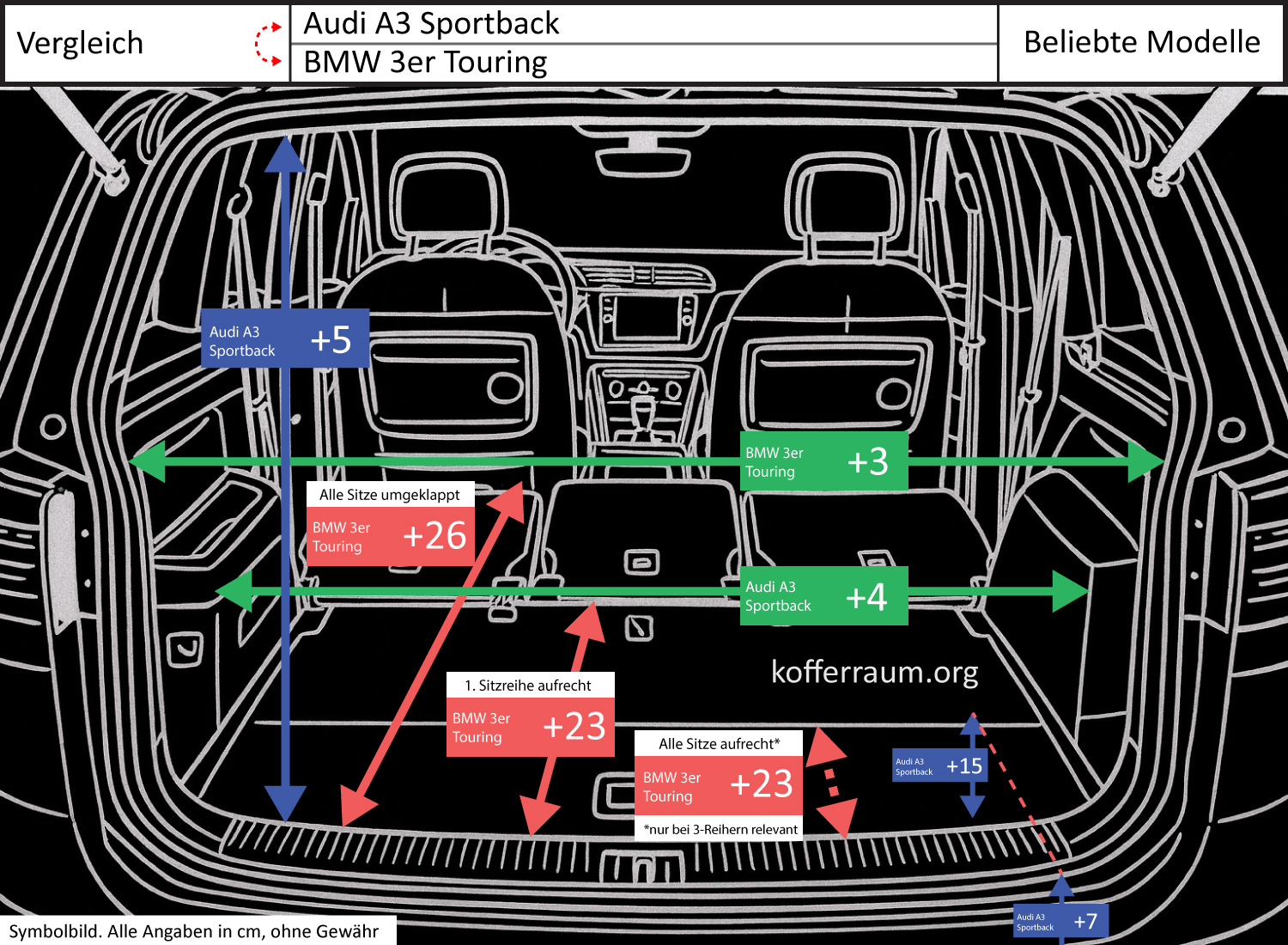
The BMW 3 Series Touring offers a 10.2 in (≈17%) longer loading length when all seats are folded down. The BMW is also significantly longer with the rear seats upright: +9.1 in (≈30%) compared to the Audi A3 Sportback.
The Audi A3 Sportback, on the other hand, has a significantly greater depth between the loading edge and the trunk floor: +5.9 in (≈1500%). Additionally, the loading edge of the Audi is 2.8 in (≈12%) higher above the road than that of the BMW.
Impact on Usability
Transporting long items: Due to the longer loading dimensions (with seats folded down and with rear seats upright), the BMW clearly has the advantage. Furniture, long boards, skis, or bulky panels can be more easily accommodated in the 3 Series Touring because there is more usable interior length.
Stacking and volume behavior: The significantly greater depth in the Audi means more "vertical depth" behind the loading edge. This is advantageous when higher stacks or irregularly shaped cargo need to be stored inside the trunk; small items can be recessed deeper and are less likely to shift.
Loading and unloading / handling heavy loads: The 2.8 in higher loading edge in the Audi increases the effort required to lift heavy items in.
Combined with the deeper trunk recess, lifting over the edge and lowering into the interior can be more cumbersome. The BMW with its lower loading edge is more practical here for heavy luggage, strollers, or bulky loads that need to be rolled or pushed.
Everyday use: For users who frequently transport long items or regularly fold down the rear seats, the BMW is the better choice. Those who need more deep storage space for tall luggage or often smaller, stackable cargo benefit from the Audi—but must accept a higher loading edge and thus more lifting effort.