
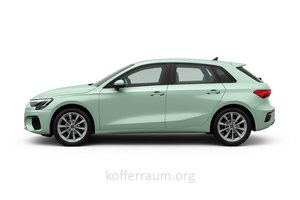
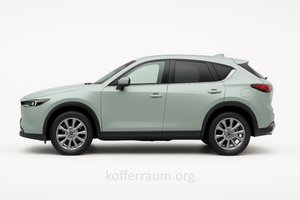
Trunk comparison: Audi A3 Sportback vs Mazda Mazda CX-5
Key Differences and Their Impact on Usability
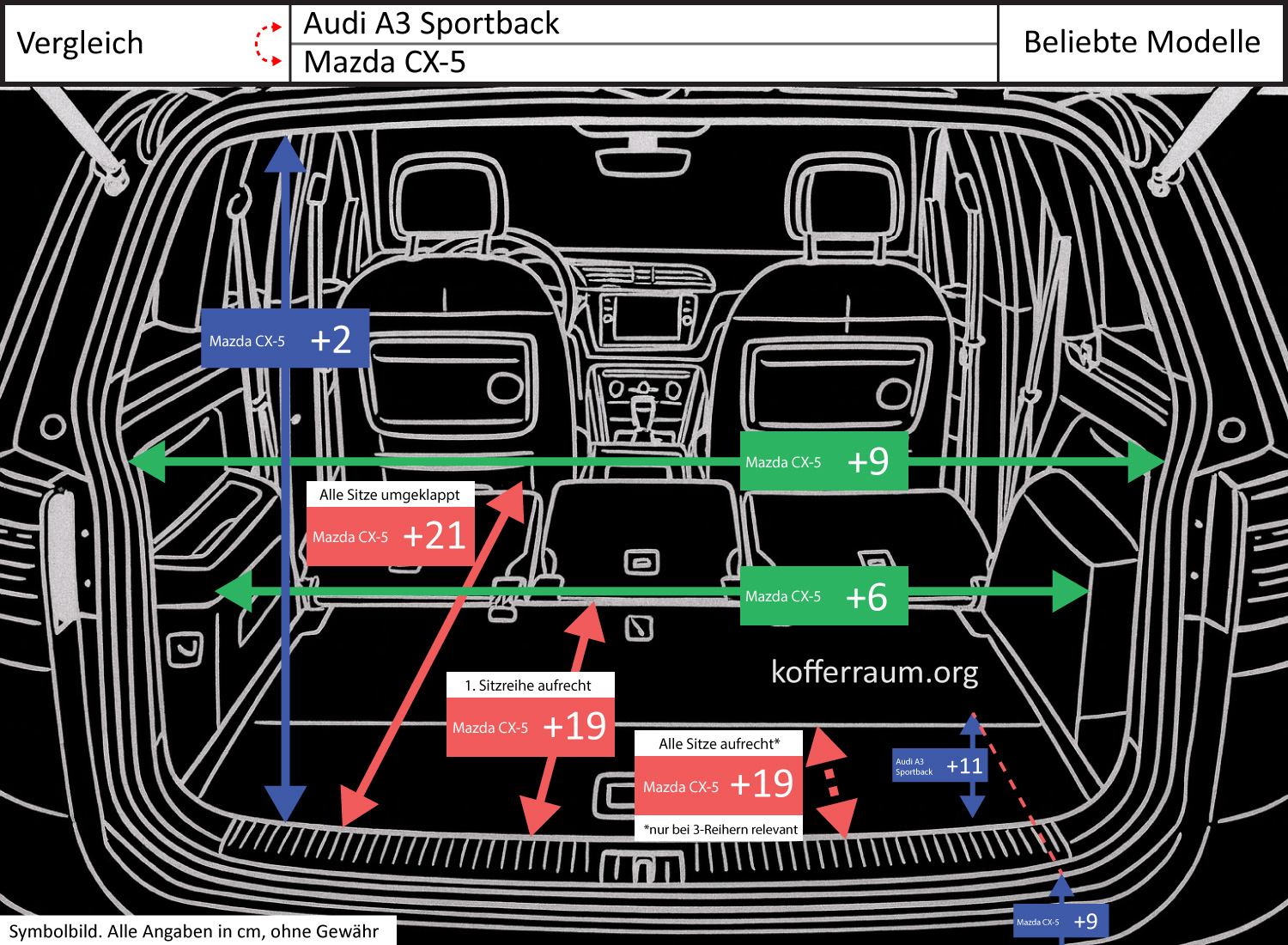
The Mazda CX‑5 offers significantly more cargo length: +8.3 in (14%) with the seats folded down and +7.5 in (25%) with the first row upright compared to the Audi A3 Sportback. This makes the CX‑5 better suited for long items (e.g., slats, skis, furniture parts) and for larger luggage loads during trips or moves.
The Audi A3 stands out in the depth of the trunk space (loading edge → trunk floor): the A3 is +4.3 in (220%) deeper than the CX‑5. Practically, this means the load floor sits significantly lower below the loading edge, allowing low-placed and stackable cargo to rest more stably and creating slightly more usable depth volume.
At the same time, this results in a larger "step" when removing heavy items, which can make handling and lifting over the loading edge more difficult.
Additionally, the loading edge of the Mazda is +3.5 in (13%) higher above the road than the Audi.
This means that when loading into the CX‑5, items must be lifted somewhat higher from the ground — which can make loading heavy luggage or boxes more strenuous. Conversely, the lower loading edge of the A3 makes lifting from the ground easier.
Smaller differences (under 10%) such as the slightly greater narrow width and opening width in the Mazda (+2.4 in and +3.5 in nominally) exist but only marginally affect everyday usability.
Brief conclusion: For longer or bulkier luggage and family/travel use, the Mazda CX‑5 is the more practical choice. For frequent loading and unloading of heavy loads from the ground or when a lower loading edge is desired, the Audi A3 Sportback scores with its lower entry and deeper load floor.