
Trunk comparison: Audi Q2 vs Hyundai i10
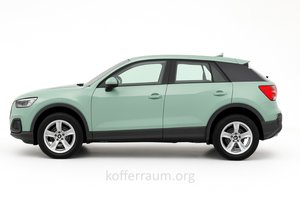
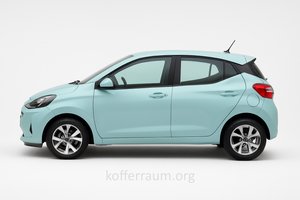
Key Differences
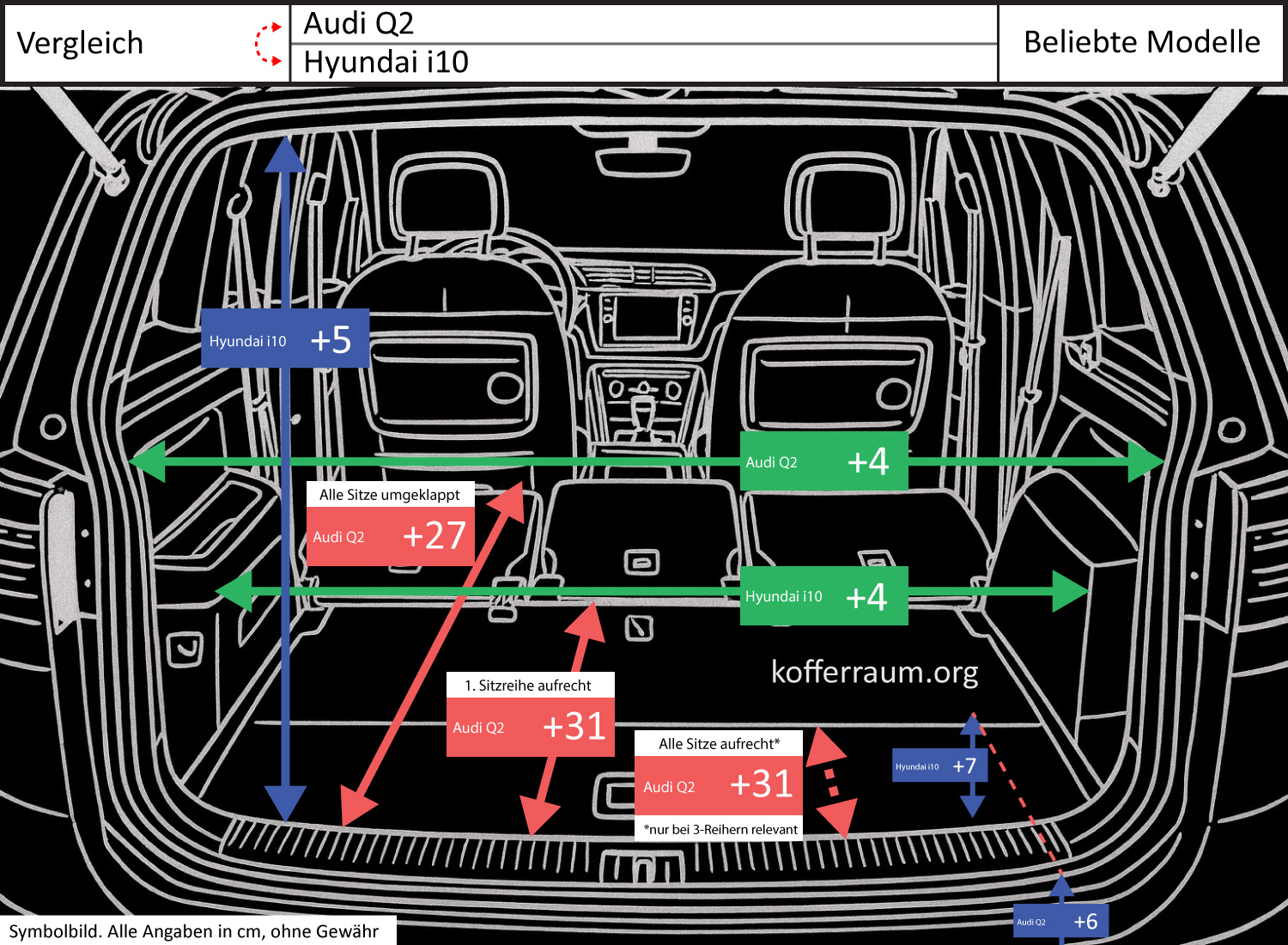
The Audi Q2 offers significantly more cargo length: when all seats are folded down, the trunk of the Q2 is +10.6 in (23%) longer than that of the Hyundai i10; with the first row of seats upright, the advantage is even +12.2 in (66%).
The Hyundai i10, on the other hand, has a considerably greater trunk depth (distance from loading edge to trunk floor) by +2.8 in (64%).
Impact on Usability
More cargo length in the Audi Q2 means specifically: longer items (skis, furniture parts, longer boxes) can be transported more easily and more often.
Even with a fully loaded interior, the Q2 retains more usable depth for luggage and cargo, making it more practical for moves, longer loads, or travelers with bulky luggage.
The greater depth of the Hyundai i10 means more vertical space behind the loading edge – advantageous when stacking taller items or accommodating bulky, not necessarily long objects.
However, the loading floor sits lower or further below the loading edge, which makes lifting heavy loads somewhat less convenient and can make reaching items placed lower more difficult.
Other, smaller differences (under 10%) only slightly affect handling: the trunk opening of the i10 is about +2 in higher, which makes loading tall items somewhat easier; the loading edge of the Q2 is about +2.4 in higher above the road, making lifting heavy loads a bit more strenuous.
Width differences of ~4% (narrowest point and opening width) are minor and hardly affect everyday usability.
Conclusion
Those who regularly transport longer or elongated goods clearly benefit from the Audi Q2 (longer cargo area).
Those who rely more on tall, bulky, not necessarily long storage space and value greater interior depth will find advantages in the Hyundai i10. Smaller differences in opening height, loading edge height, and widths are less decisive in everyday use.