
Trunk comparison: Audi Q2 vs Kia Ceed
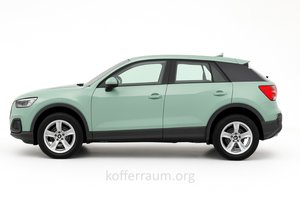
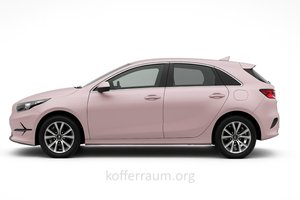
Summary of the biggest differences
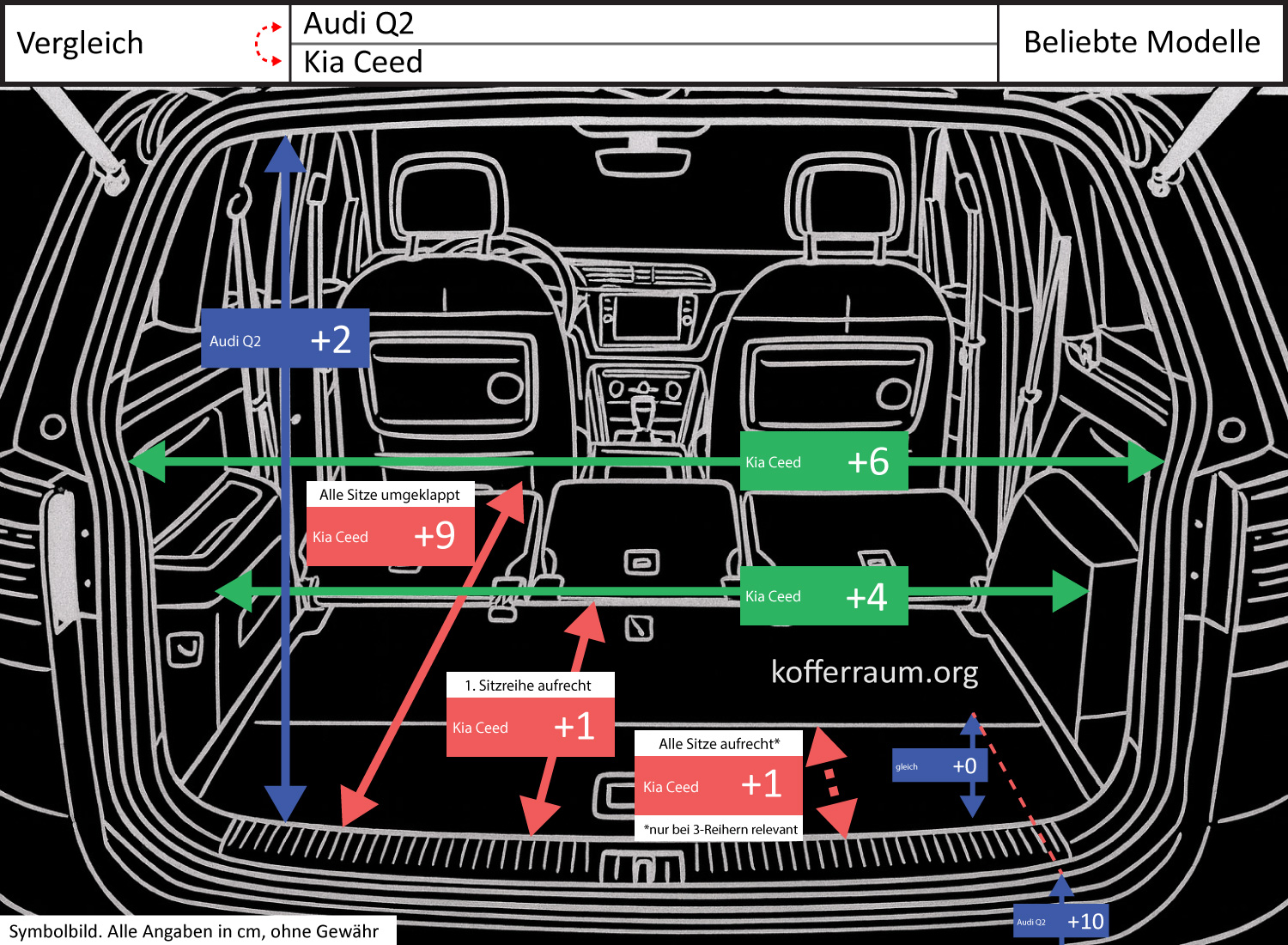
In the trunk, the Kia Ceed is slightly ahead in some dimensions: with the seats folded down, the Ceed's trunk is 3.5 in (6%) longer, and with the first row of seats upright, it is 0.4 in (1%) longer.
The width at the narrowest point is 1.6 in (4%) greater in the Ceed, and the width of the trunk opening is 2.4 in (6%) larger.
The depth (loading edge to trunk floor) is the same in both models. The height of the trunk opening is 0.8 in (3%) greater in the Audi Q2. However, the loading edge height stands out significantly: the Audi Q2 has a loading edge that is 3.9 in (15%) higher above the road than the Kia Ceed.
Impact on usability
High loading edge in the Audi Q2 (≈15% higher): This is the practically biggest difference.
A loading edge that is 3.9 in higher makes loading and unloading heavier or bulky items significantly more strenuous — more lifting, less favorable leverage, more difficult loading with strollers, large boxes, or bulky furniture parts.
For users who frequently transport heavy loads or often work with low lifting positions (e.g., craftsmen, families with large luggage), the Kia Ceed is more ergonomic and practical due to the lower loading edge.
The higher loading edge of the Q2 can have a positive effect on ground clearance and visibility while driving but does not help with loading.
Space for long items: The Kia Ceed offers 3.5 in (6%) more cargo length with the seats folded down.
This facilitates storing longer items (skis, slats, boxes); the difference is noticeable but moderate — sufficient for occasional longer loads but does not fundamentally make the Ceed a transport solution for very long goods.
Width of the cargo space and opening: The Ceed is 1.6 in wider at the narrowest point and 2.4 in wider at the opening. This helps when loading wide-format objects (e.g., luggage, strollers) and reduces maneuvering when storing. The advantage is moderate but relevant in tight situations.
Trunk opening and depth: The 0.8 in higher opening in the Q2 is practically hardly noticeable; depth is equal — floor area and usable loading space are comparable.
Conclusion
The biggest and most usage-relevant difference is the significantly higher loading edge of the Audi Q2 (≈15%), which complicates handling heavy or bulky loads. The Kia Ceed offers somewhat more length and width in the cargo space in practice, making loading and storing more flexible and ergonomic.
If frequent lifting of heavy items or loading wider/larger luggage is important, the Ceed has the advantage. If seating position, ground clearance, or SUV-typical driving characteristics are more important, that speaks for the Q2 — purely in terms of cargo usability, the Ceed is overall more practical.