
Trunk comparison: Audi Q2 vs Mercedes Benz GLE
Key Differences
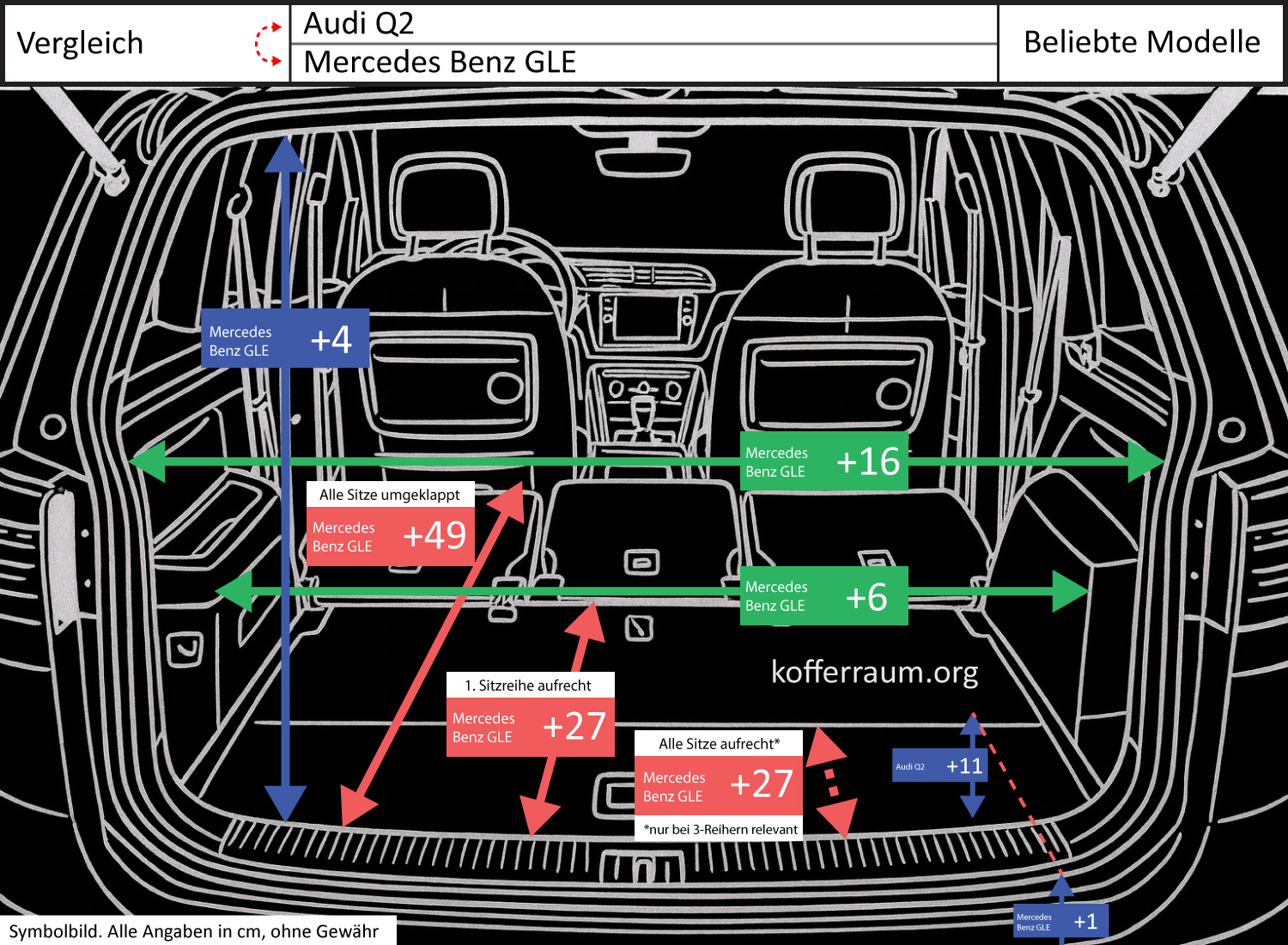
The data shows four notable differences: The Mercedes‑Benz GLE offers significantly more cargo space with the seats folded down (+19.3 in or +34%) and significantly greater trunk depth in the longitudinal direction with the first row of seats upright (+10.6 in or +35%).
The width of the trunk opening is significantly larger on the GLE by +6.3 in (+17%). In contrast, the Audi Q2 has a significantly greater depth from the loading edge area to the trunk floor (+4.3 in; indicated as 1000% in the data), meaning a deeper trunk floor behind the loading edge.
Impact on Usability
Because the GLE is significantly longer (both with folded seats and with the seat row upright), longer items can be stored flat – ideal for furniture parts, long sports equipment (skis, surfboards), moves, or transporting long work materials.
The larger opening width makes loading and unloading wider objects and boxes easier; bulky items overall fit into the GLE more easily and gently.
The deeper trunk floor of the Audi Q2 means items sit somewhat "lower": this can be an advantage if you want to store items lower or make the cargo less visible. This is practical for flat, stackable loads.
Disadvantages include lifting into a recess and less convenient access to heavy items because you have to set them down further down or lift them back up.
Additionally, the greater longitudinal extension of the GLE compensates for this depth in many everyday scenarios – long items often do not fit in the Q2 without limitations.
Smaller Differences
Other differences are comparatively minor: The trunk opening of the GLE is about +1.6 in higher (≈5%), the narrowest width in the trunk is +2.4 in (≈6%) in favor of the GLE, and the loading edge of the GLE is about +0.4 in higher above the road (≈1%).
These values usually have only minor practical effects in everyday use.