
Trunk comparison: Audi Q2 vs Tesla Model Y
Key Differences
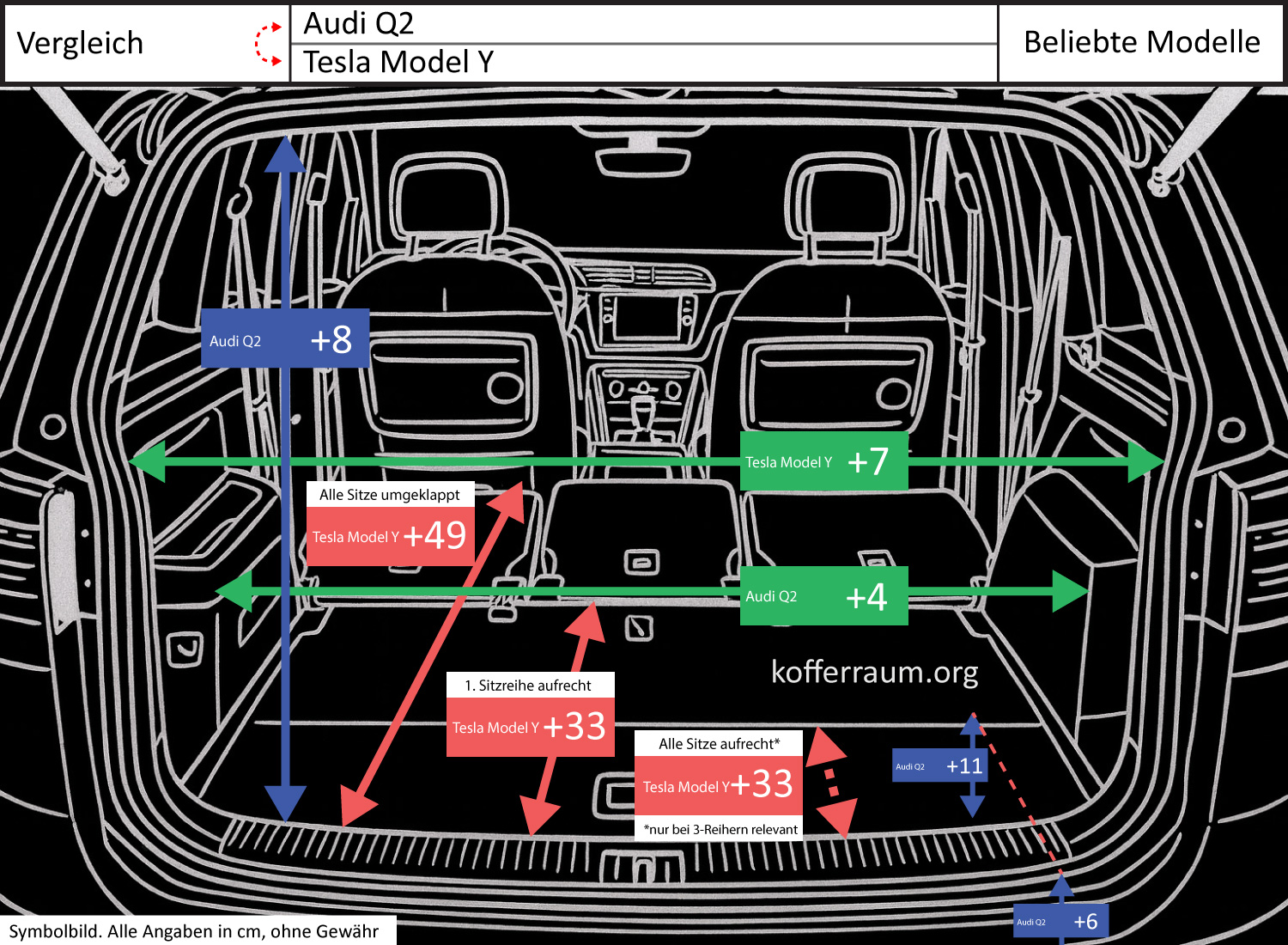
In terms of cargo space, the Tesla Model Y is clearly ahead: with the seats folded down, the trunk of the Model Y is +19.3 in (34%) longer, and with the first row of seats upright, it is +13 in (42%) longer. This makes the Model Y superior especially for long or flat items.
The Audi Q2, on the other hand, scores in vertical dimension: the height of the trunk opening is +3.1 in (12%) larger and the depth of the trunk (distance from loading edge → trunk floor) is +4.3 in (1000%) greater.
The result is more usable height or a deeper cargo compartment in the Q2, which leads to different usage behavior.
Practical Implications / Usability
Model Y — Advantages in length and transporting long items: - Due to the significantly greater loading length (both with folded and upright seats), long items such as slats, skis, furniture parts, or longer boxes can be transported more easily. - The slightly wider trunk opening of the Model Y makes it easier to load wider items.
Audi Q2 — Advantages in height and "depth" storage: - The higher trunk opening and the significantly deeper loading area allow for accommodating taller or stackable items without them protruding beyond the opening. - The deeper cargo compartment can also cause luggage to "sit deeper" and protrude less from the rear opening, which is practical for high stackability or when minimizing visibility/protrusion is desired.
Practical trade-offs: - For frequent transport of very long/flat goods, the Tesla Model Y is the more practical choice. - For frequent storage of taller or stackable packages, or when a deeper cargo space is desired, the Audi Q2 is better suited. - Smaller differences (loading edge height when loading is 2.4 in higher in the Q2, width differences of 4–2.8 in) only slightly affect everyday usability: a higher loading edge makes lifting heavy items harder, while a lower loading edge and larger opening width make sliding items in and out easier.