
Trunk comparison: Audi Q2 vs Volvo XC40

Key Differences and Their Impact on Usability
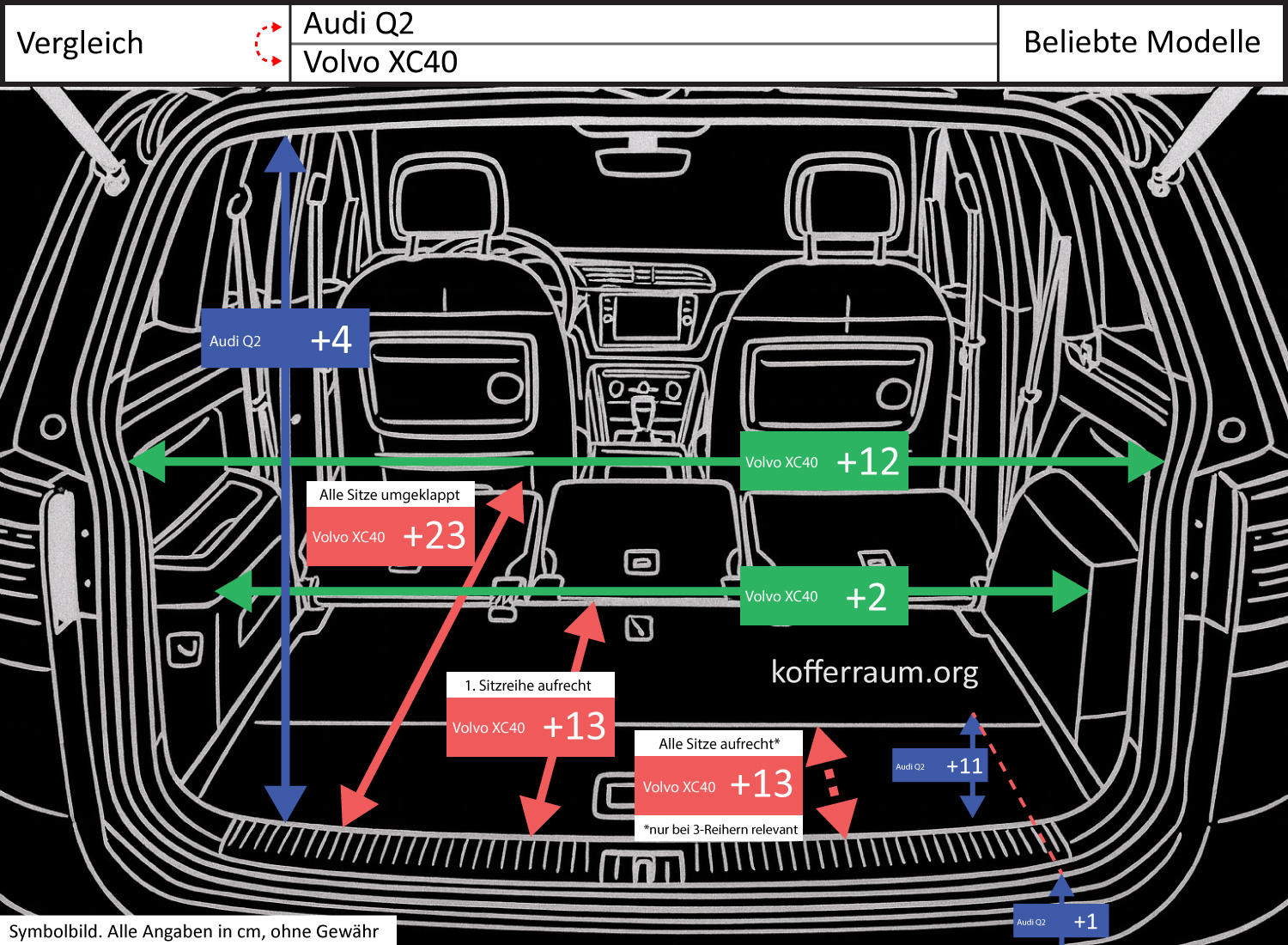
The Volvo XC40 offers significantly more cargo length: with the seats folded down, it is 9.1 in (16%) longer, and with the first row upright, 5.1 in (17%) longer than the Audi Q2. This makes the XC40 noticeably more practical for long items (skis, planks, long boxes) and for larger luggage loads, as the usable cargo area length increases noticeably.
Additionally, the XC40 has a significantly wider opening: the width of the trunk opening is 4.7 in (13%) larger. This makes loading bulky or wide items (possibly larger furniture pieces, bulky boxes) easier and reduces the need for turning/manoeuvring when loading.
The Audi Q2, on the other hand, scores in the depth between the loading edge and trunk floor: it is 4.3 in (1000%) deeper here. Practically, this means more volume in a deeper cargo space — good for stackable/space-consuming loads that can be placed in a recess.
At the same time, the deeper cargo floor can make loading and unloading heavy items more difficult (more lifting or lowering) and complicates fully flat loading if the depth creates a strong depression instead of a flat surface.
Smaller differences: The opening height of the Q2 is 1.6 in (5%) higher, the loading edge is 0.4 in (1%) higher, and the narrowest width in the trunk is only 0.8 in (2%) larger in the XC40 — these values are minor and have little impact on everyday usability.
Conclusion: For users who frequently transport long or wide items, the Volvo XC40 is the more practical choice due to its significantly greater length and opening width. Those who value more volume in a deeper cargo well and are willing to accept a bit more effort when lifting will find advantages in the Audi Q2.