
Trunk comparison: Audi Q3 vs BMW 3 Series Touring

Key Differences
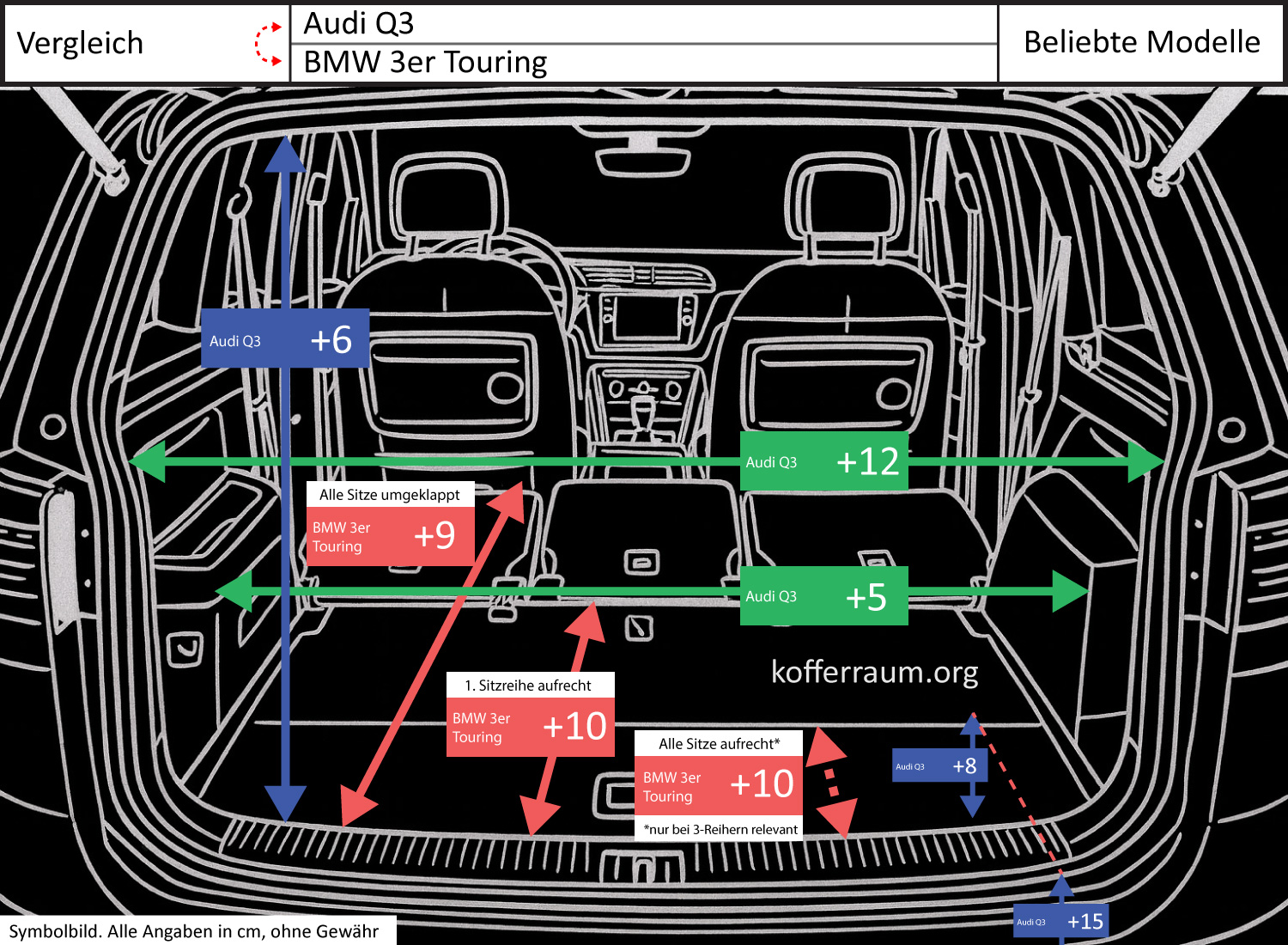
Significant differences mainly concern loading height, loading opening, and usable loading length with rear seats occupied. The BMW offers a noticeably longer loading length with +3.9 in (≈+11%) when the front row is upright.
The Audi scores points with interior geometry and access: the depth between the loading edge and trunk floor is significantly larger in the Audi with +3.1 in (≈+800%), the loading edge in the Audi is +5.9 in (≈+25%) higher above the road, and the width of the trunk opening is +4.7 in (≈+12%) larger.
Smaller differences, such as +5% in total folded length favoring the BMW or +8% in trunk opening height favoring the Audi, exist but are less relevant.
Impact on Usability
The longer loading length in the BMW with upright rear seats makes it more practical for long items that need to be transported despite passengers (e.g., skis, slats, long packages).
The significantly greater depth in the Audi means more usable space behind the loading edge and often a better possibility to lay or stack bulky or taller items flat.
However, the higher loading edge of the Audi makes lifting heavy loads in and out more difficult compared to the lower BMW; easier loading (e.g., suitcases, strollers) is more comfortable in the BMW.
The wider Audi loading opening significantly facilitates loading and unloading wider items and reduces maneuvering when storing bulky parts.
In short: For long items with occupied seats, the BMW 3 Series Touring is advantageous. For large, bulky, or wide transport as well as when stable stacking behind the loading edge is important, the Audi Q3 offers practical added value — with the compromise of a higher loading edge during loading and unloading.