
Trunk comparison: Audi Q3 vs Ford Escape
Key Differences
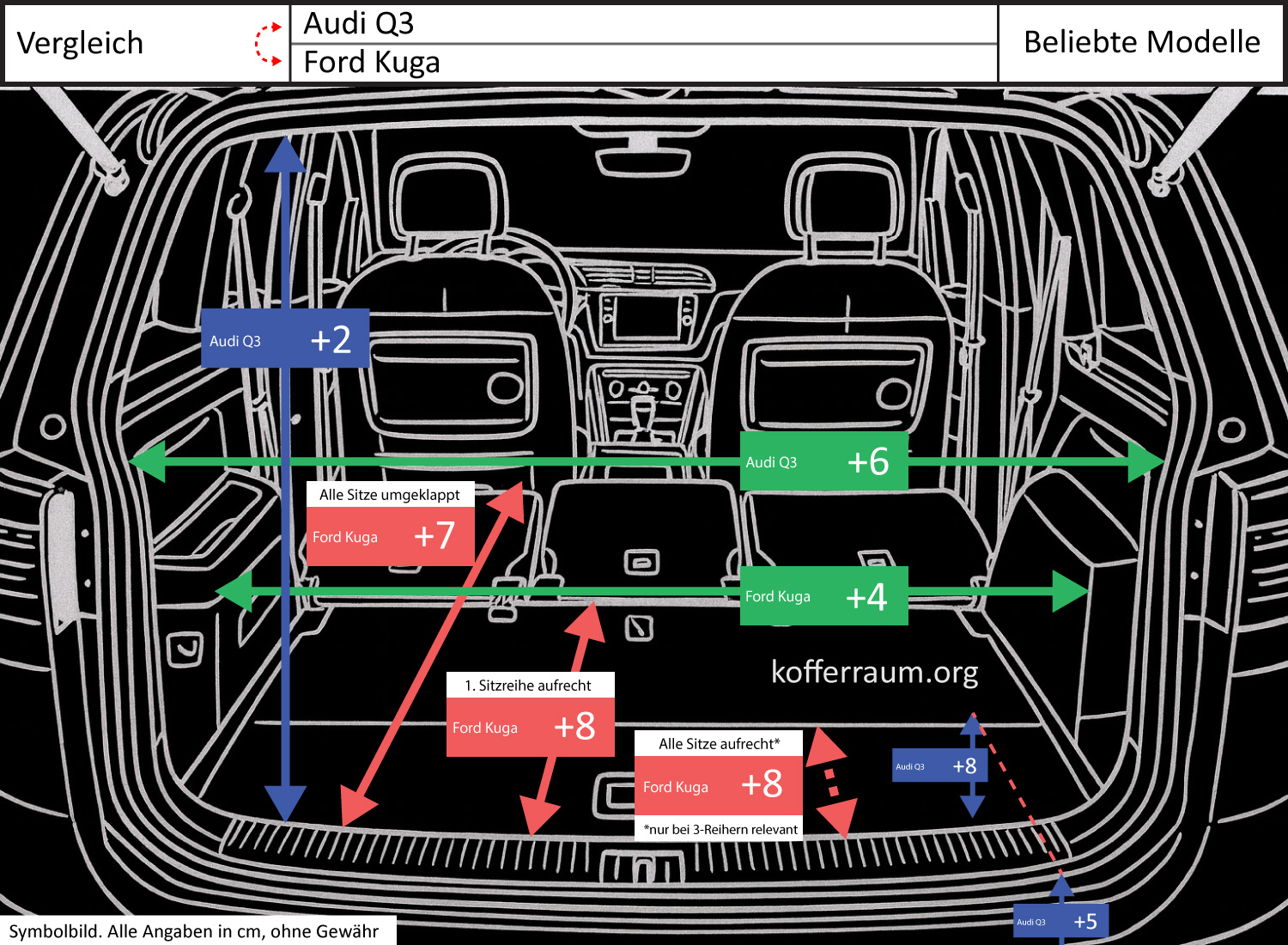
The Ford Kuga offers a longer cargo area: with the seats folded down, the Kuga is 2.8 in (≈4%) longer, and with the front row upright, it is 3.1 in (≈9%) longer than the Audi Q3. The narrowest point of the trunk is 1.6 in (≈4%) wider in the Kuga, while the width of the trunk opening is 2.4 in (≈6%) larger in the Audi Q3. The height of the trunk opening in the Audi Q3 is 0.8 in (≈3%) higher than that of the Kuga.
The loading edge of the Audi Q3 sits 2 in (≈7%) higher above the ground.
Significantly larger is the depth of the trunk (loading edge to trunk floor) in the Audi Q3: it is 3.1 in (+800%) greater than that of the Ford Kuga.
Impact on Usability
The noticeably greater trunk depth of the Audi Q3 means practically more "recess" below the loading edge: small to medium-sized items can be sunk deeper and roll out less, bags and groceries lie more securely and better concealed.
This increases everyday practicality with loose cargo and enhances the usable payload for bulky but not very long items.
The Ford Kuga scores with loading length: longer items (skis, slats, long boxes) fit better, especially when the front row remains upright. For users who often transport long cargo, the Kuga is therefore more favorable.
The slightly higher trunk opening and the larger opening width in the Audi Q3 make loading tall or wide items easier. Opposing this is the higher loading edge: heavy loads must be lifted somewhat higher in the Q3, while loading is physically easier in the Kuga.
The width differences (only a few percent each) are hardly decisive in everyday use; they only affect narrowly dimensioned cargo.
In short: Kuga = better for longer cargo and easier lifting; Q3 = safer, deeper storage and somewhat better opening dimensions, but higher loading edge. Which option is more practical depends on the typical usage profile (long items vs. stowable/loose cargo and frequent loading/unloading of heavy loads).