
Trunk comparison: Audi Q5 vs Mazda Mazda CX-5


Key Differences
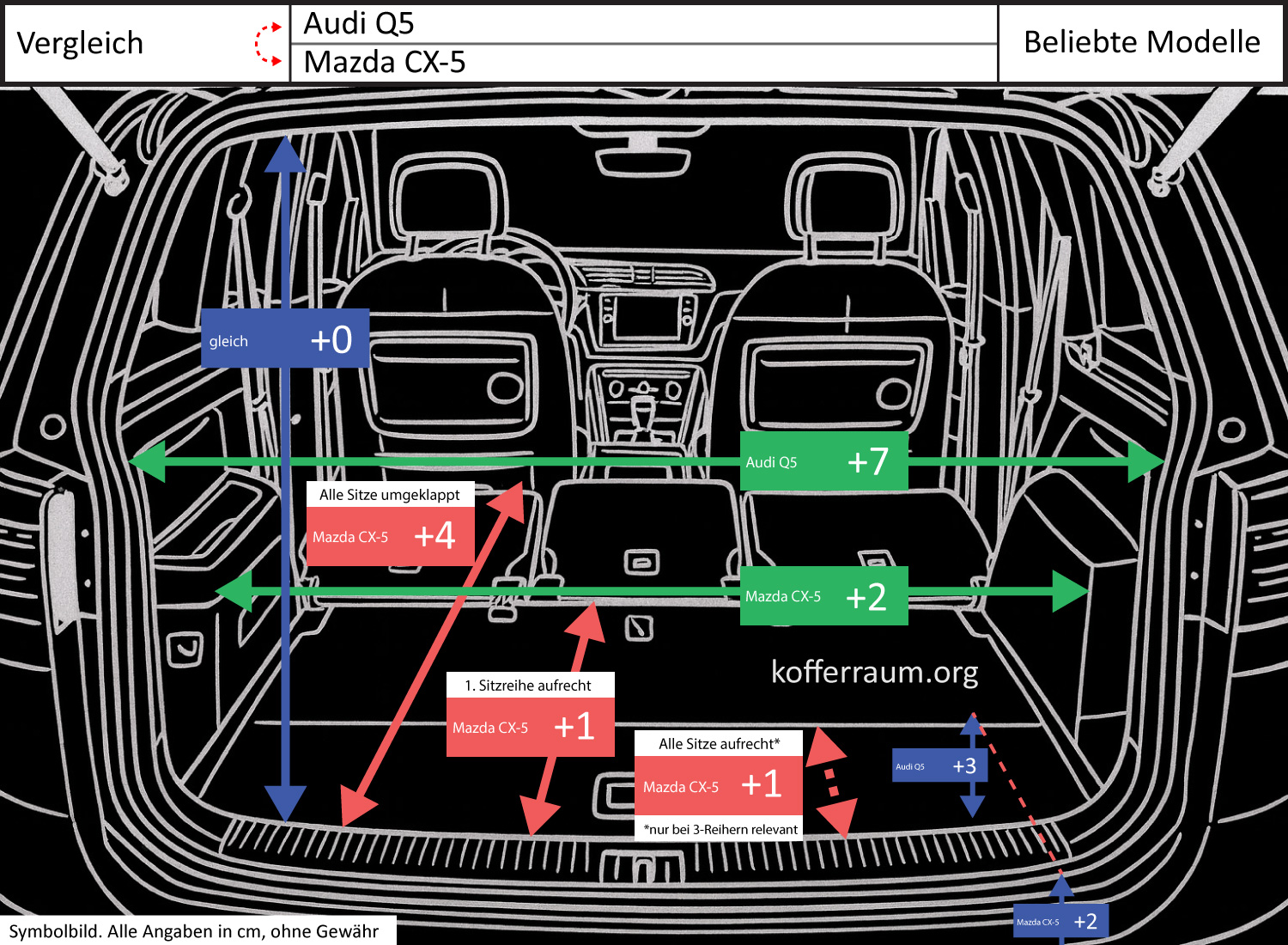
The depth of the trunk (distance from loading edge → trunk floor) is 1.2 in or 60% greater in the Audi Q5 than in the Mazda CX‑5. All other dimensions differ only by single-digit percentages: The Mazda has +1.6 in (2%) more loading length with the rear seats folded down and +0.4 in (1%) more with the first row upright than the Audi.
The trunk opening height is the same; the width at the narrowest point is +0.8 in (2%) greater in the Mazda, while the opening width is +2.8 in (7%) greater in the Audi. The Mazda’s loading edge is +0.8 in (3%) higher above the road than the Audi’s.
Implications for Usability
The significantly greater trunk depth of the Audi practically means more usable interior space below the loading edge: bulky or tall items can be pushed further inside and lie deeper, which improves packing stability and is advantageous for fragile cargo.
Combined with the slightly lower loading edge in the Audi (Mazda +0.8 in), the effective lift height when loading is reduced – making it easier overall to load heavy or awkward items.
The other differences are small and hardly affect everyday practicality: The Mazda offers marginally more loading length when folded down (+1.6 in), which can be a small advantage for very long, flat items.
The slightly greater width at the narrowest point in the Mazda (+0.8 in) is barely noticeable, while the greater opening width in the Audi (+2.8 in) can make it easier to load wider items. The same opening height means no difference for loading tall items through the opening.
In short: For easy loading and unloading of heavy or bulky items, the Audi Q5 is more advantageous in everyday use due to the significantly deeper loading floor (60% difference) and the lower loading edge. For very long, flat items or minimal width differences, the Mazda’s marginal advantages play a minor role.