
Trunk comparison: BMW 3 Series Touring vs Durchschnitt Wagon

Key Differences
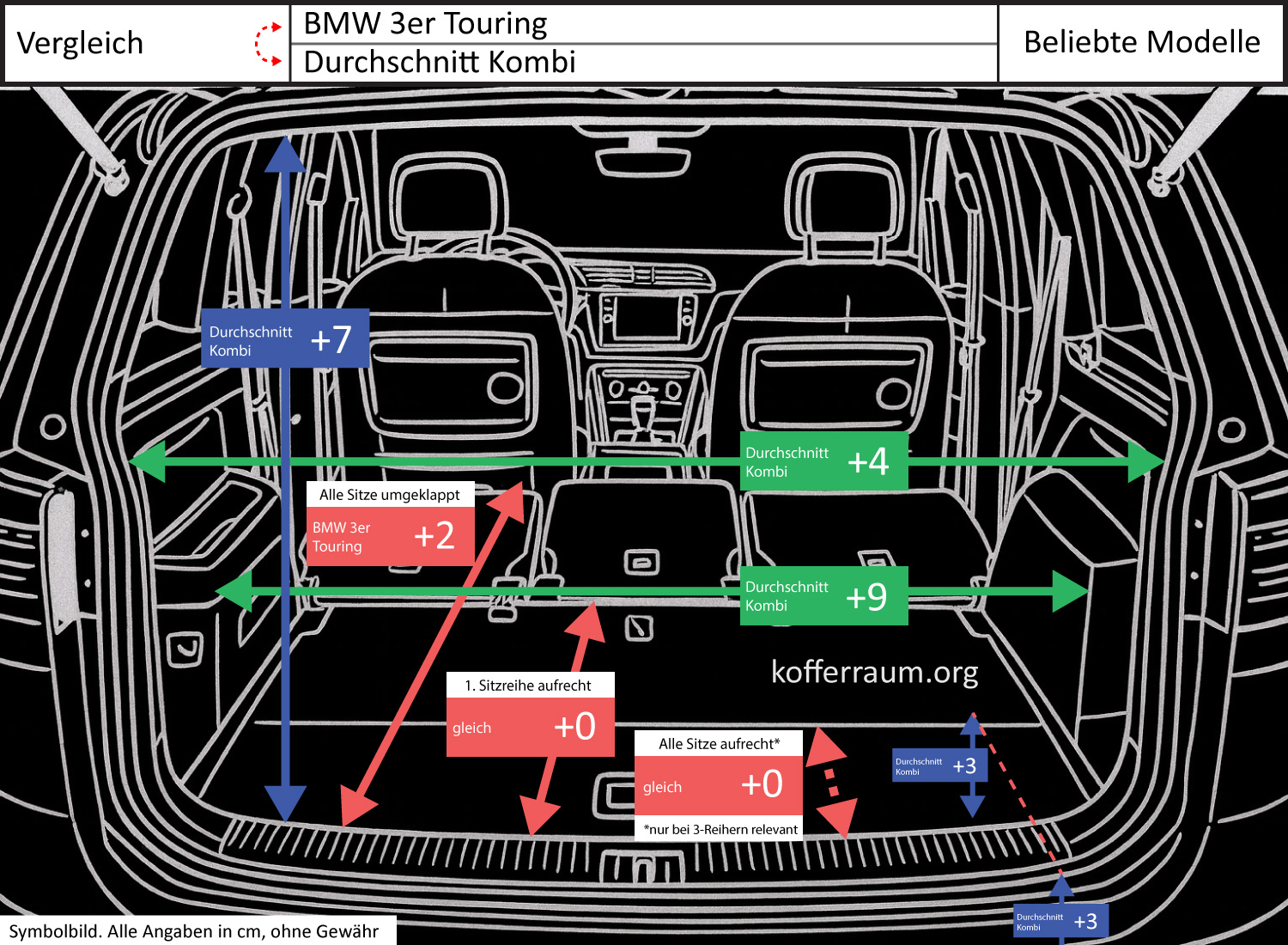
The depth of the trunk (loading edge → trunk floor) is 1.2 in (+300%) greater in the average wagon than in the BMW 3 Series Touring. Practically, this means: The average wagon has a significantly deeper cargo well below the loading edge, creating more volume beneath the loading opening and allowing smaller items to be more easily "sunk".
At the same time, the deeper cargo floor increases the bending effort when handling heavy or bulky loads and can make retrieving items more difficult.
Further Differences and Their Effects
Trunk length with folded seats: The BMW is 0.8 in (1%) longer — negligible; with the first row upright, the lengths are the same. This means: in practice, both offer a similar amount of usable cargo space lengthwise.
Height of the trunk opening: The average wagon is 2.8 in (10%) higher. This slightly eases loading tall items but is not a major difference.
Loading edge height above the road: The loading edge of the average wagon is 1.2 in (5%) higher above the road than the BMW. This makes loading heavy items somewhat easier in the BMW (lower leverage), while lifting is a bit more strenuous in the average wagon.
Width at the narrowest point: The average wagon is 3.5 in (9%) wider; trunk opening width: +1.6 in (4%). Both are slight advantages for wider or bulky items but also not large differences.
Conclusion — Usability
The biggest practical difference is the significantly greater depth of the average wagon below the loading edge: more hidden volume but potentially less convenient handling when loading. All other differences are small (≤10%) and lead to only marginal trade-offs in practice.
Those who frequently load and unload heavy, bulky cargo benefit more from the BMW (lower loading edge and comparable lengths). Those who value additional, partly hidden cargo volume find the advantage of the deeper cargo well in the average wagon.