Trunk comparison: BMW 3 Series Touring vs Fiat Panda
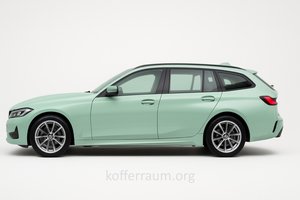
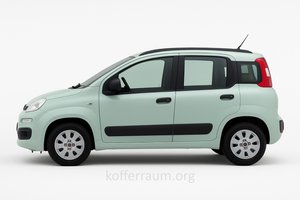
Key Differences
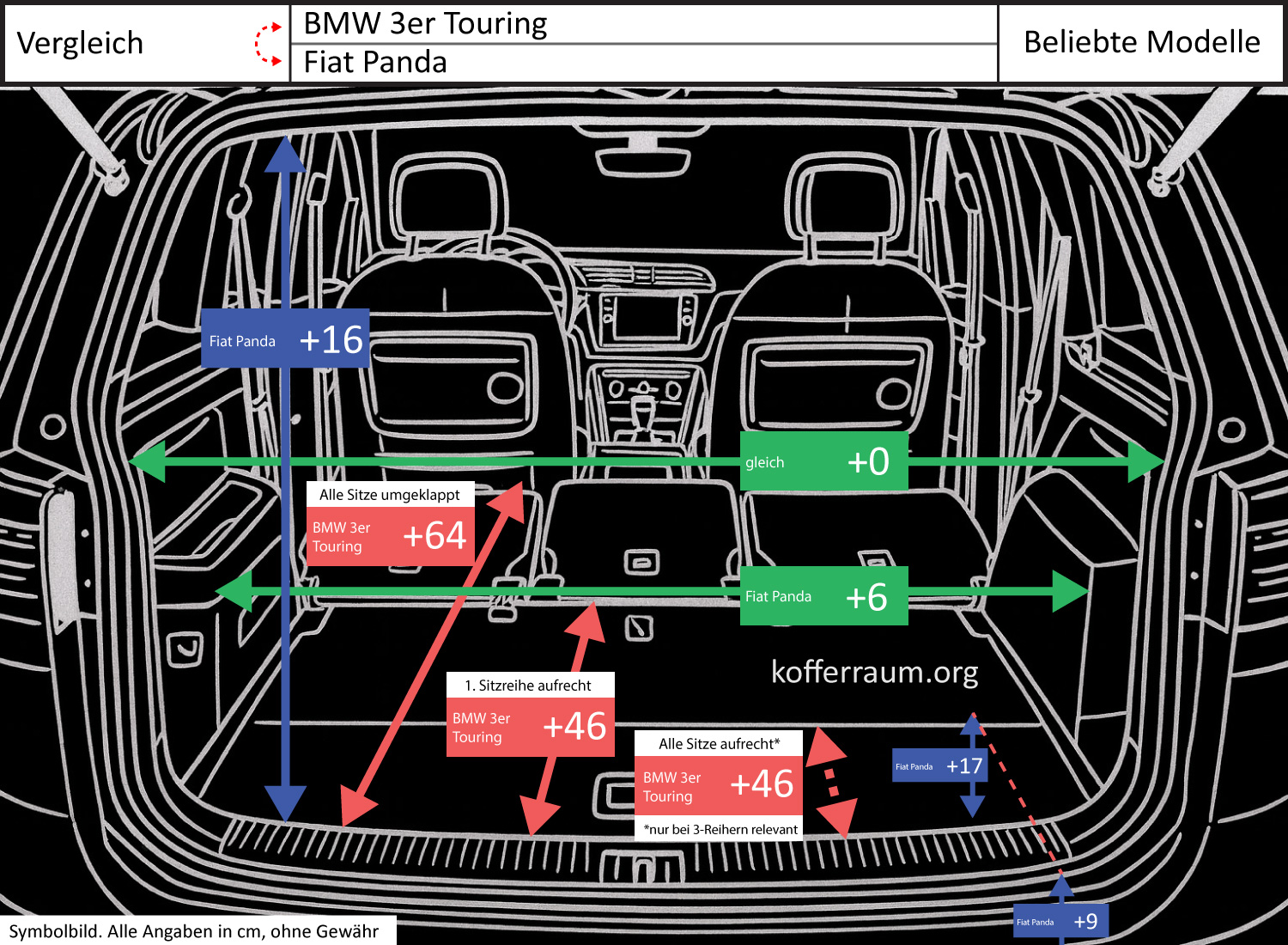
Clear focuses emerge when comparing cargo volume and trunk shape: The BMW 3 Series Touring offers significantly more cargo length — +25.2 in (58%) with the seats folded down and +18.1 in (85%) when the first row of seats is upright.
In contrast, the Fiat Panda has advantages in the vertical dimension: The Panda's trunk opening is +6.3 in (22%) higher, the distance between the loading edge and the trunk floor is +6.7 in (1700%) greater, and the loading edge overall is +3.5 in (15%) higher above the ground.
The narrowest trunk width is only slightly larger on the Panda (+2.4 in / 6%, not highlighted), and the trunk opening width of both models is the same.
Implications for Usability
The significantly longer loading options of the BMW make it the better choice for long or flat transports: skis, long furniture parts, flatpacks, or bulky items can be more easily and often fully accommodated horizontally in the 3 Series Touring.
For users who regularly transport long loads or rely on maximum cargo length, the BMW is therefore more practical.
The Fiat Panda is better suited for transporting tall or bulky items that require vertical space: the higher trunk opening and the greater distance between the loading edge and trunk floor create more vertical room and make it easier to store tall boxes, plants, or suitcases.
However, the Panda's loading edge is higher off the ground, which makes lifting heavy items from the ground into the trunk more strenuous. Those who frequently lift heavy loads benefit more from the BMW's lower loading edge, despite its lower opening height.
In summary: For long, flat, or bulky cargo, the BMW 3 Series Touring is clearly advantageous; for tall, bulky items and frequent loading with high vertical space needs, the Fiat Panda is more practical. Differences in width and opening width are minor or nonexistent and hardly affect everyday usability.