Trunk comparison: BMW 3 Series Touring vs Nissan Rogue Sport


Key Differences
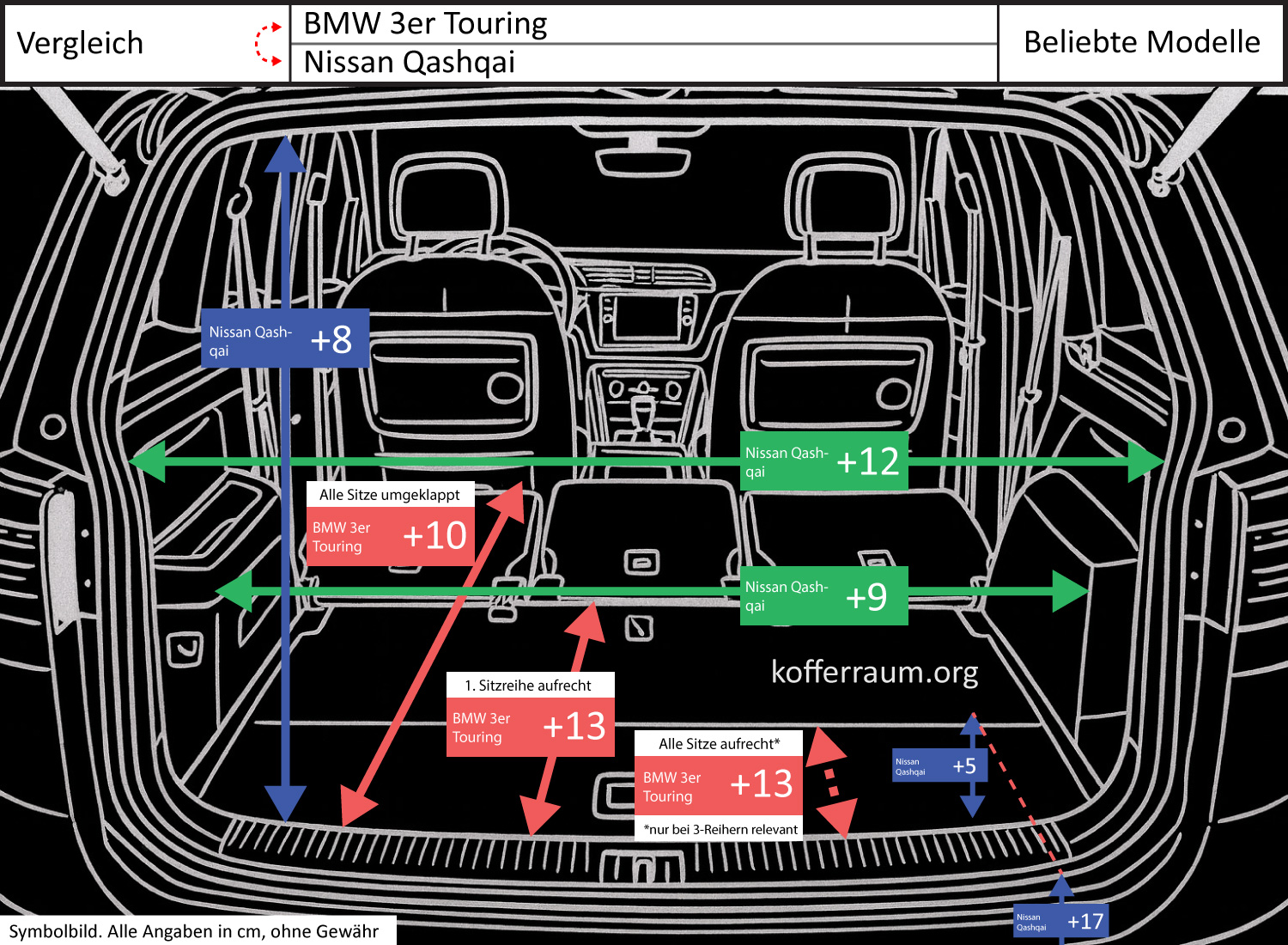
The comparison reveals several differences over 10% that affect everyday usability: The BMW offers a longer cargo space with the rear seats upright (+5.1 in / +15%), meaning more usable length for long items.
The Nissan has a higher trunk opening (+3.1 in / +11%), a significantly greater interior depth between the loading edge and trunk floor (+2 in / +500%), a considerably higher loading lip (+6.7 in / +28%), and a wider trunk opening width (+4.7 in / +12%).
Implications for Usability
BMW 3 Series Touring - The longer loading area with the rear seats upright makes the Touring more practical for long items (e.g., skis, slats, long boxes) without folding down seats. - The lower loading lip (no >10% difference, but noticeable in handling compared to a significantly higher SUV sill) makes lifting heavy loads and sliding in boxes easier.
Nissan Qashqai - The wider opening and higher trunk opening make loading wide and tall items (furniture parts, boxes) easier, as less maneuvering is needed. - The significantly greater depth (500% difference) indicates more usable volume in the trunk recess — good for bulky or stackable cargo. - The considerably higher loading lip, however, makes lifting heavy items more strenuous and can complicate sliding bulky loads in from the ground.
Conclusion: For long, flat items and easy loading/unloading of heavy loads, the BMW 3 Series Touring is advantageous in everyday use.
For loading wide, tall, or very bulky items, the Nissan Qashqai offers clear benefits through a wider and higher opening as well as greater depth, but this comes at the cost of user comfort when lifting due to the higher loading lip.