
Trunk comparison: BMW 3 Series Touring vs VW T-Roc
Key Differences (highlighted >10%)
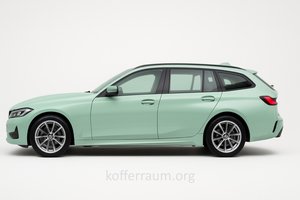
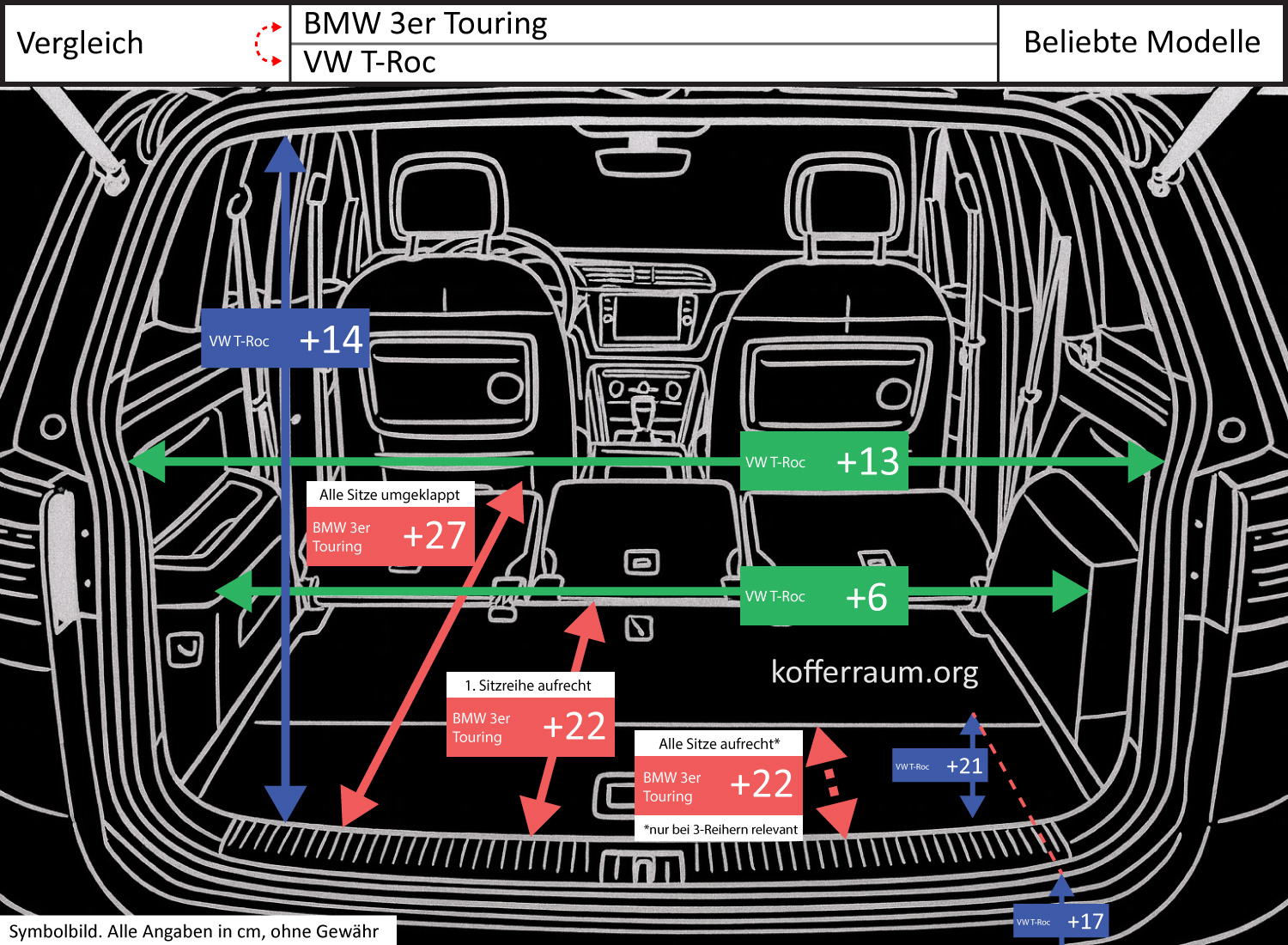
The BMW 3 Series Touring offers a significantly longer cargo area: with the seats folded down, the trunk is +10.6 in (18%) longer, and with the first row of seats upright, even +8.7 in (28%) longer than in the VW T-Roc.
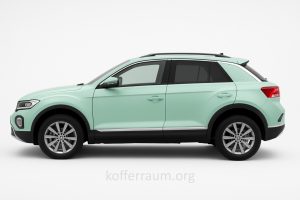
The VW T-Roc, on the other hand, has noticeable advantages in the opening and loading geometry: the trunk opening is +5.5 in (19%) higher, the loading edge is +6.7 in (28%) higher above the ground, and the distance from the loading edge to the trunk floor is +8.3 in (2100%) greater.
Additionally, the width of the trunk opening in the T-Roc is +5.1 in (13%) larger. The width at the narrowest point differs only slightly (<6%) and is therefore hardly relevant.
Impact on Usability
Practically, this means: The BMW 3 Series Touring clearly has the advantage when it comes to long items (e.g., skis, slats, long boxes). The greater length extension with folded or upright seats makes loading long cargo significantly easier and more flexible.
The VW T-Roc is better suited for bulky, tall, or wide items that need to be loaded through a larger opening and more vertical space. The higher trunk opening and wider opening facilitate sliding in bulky parts.
However, the significantly higher loading edge increases the effort required to lift heavy loads into the trunk; the larger distance between the loading edge and the trunk floor (deeper interior) also makes removing smaller items less comfortable because they lie further below the loading edge and require reaching deeper inside.
In short: BMW 3 Series Touring = better for long cargo and flat loading; VW T-Roc = better for tall and bulky items, but with more lifting effort and limited accessibility in the floor area.