
Trunk comparison: BMW X1 vs Mazda Mazda CX-5


Key Differences
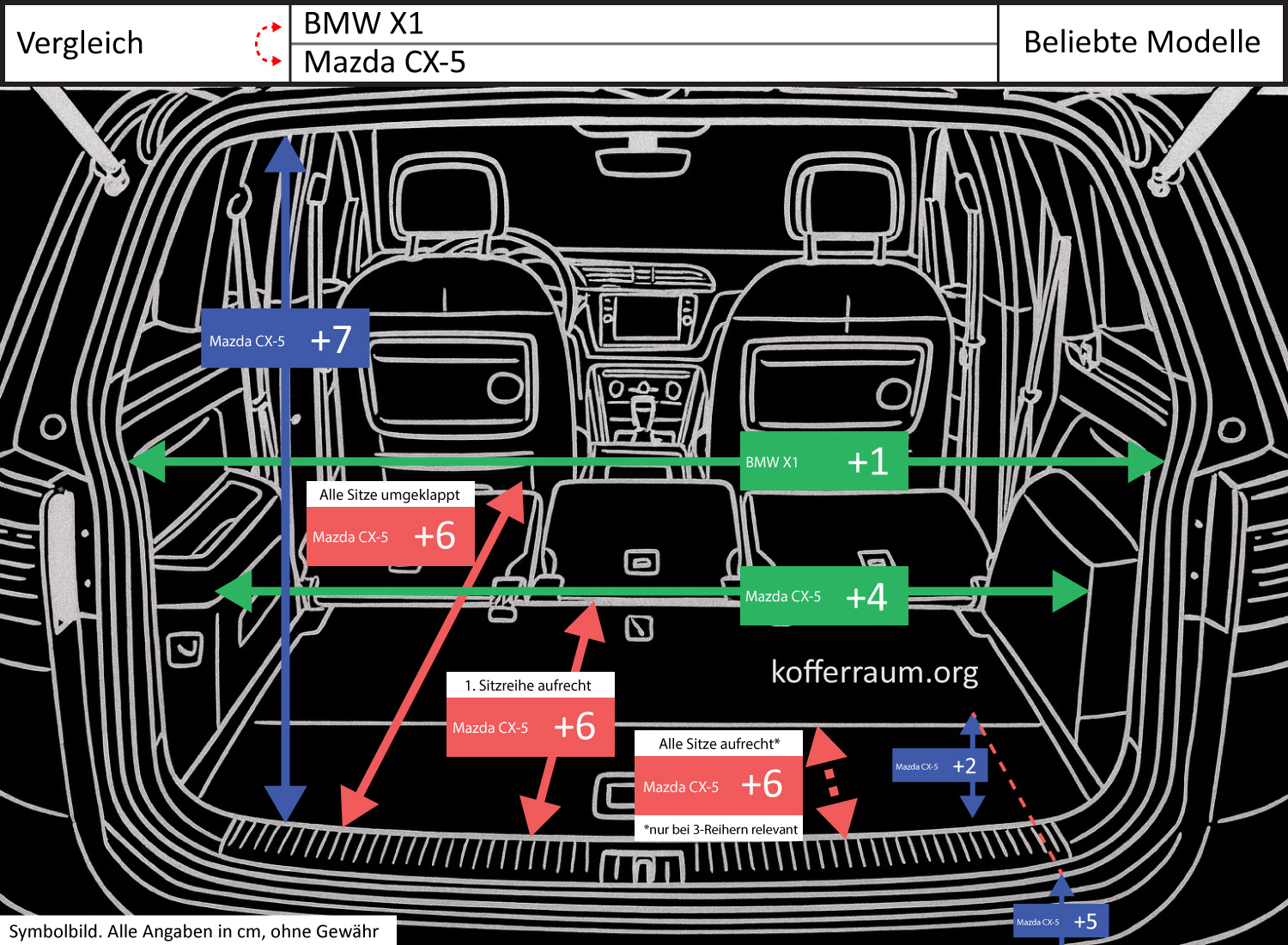
Among the given dimensions, one large percentage difference stands out: the depth of the trunk (loading edge to trunk floor) of the Mazda CX‑5 is 67% (+0.8 in) larger than that of the BMW X1. Other differences are smaller: the Mazda offers +2.4 in (+4%) more trunk length with the rear seats folded down and also +2.4 in (+7%) with the first row upright.
The trunk opening of the Mazda is +2.8 in (+10%) higher, and the loading edge overall is +2 in (+7%) higher above the ground on the Mazda. The narrowest width in the trunk is +1.6 in (+4%) greater on the Mazda, while the width of the trunk opening is 0.4 in (+1%) larger on the BMW.
Implications for Usability
The significantly larger trunk depth on the Mazda practically means more usable interior space directly behind the loading edge: this facilitates loading tall or bulky items, improves stackability, and creates more space under the tailgate.
This difference is especially noticeable when heavy or bulky cargo is not just lying flat but needs to be positioned deeper in the cargo area.
The +2.8 in higher trunk opening on the Mazda (nearly 10%) supports loading very tall items, but this is offset by a +2 in higher loading edge, which makes lifting heavy loads somewhat more strenuous.
The moderately larger length and width dimensions of the Mazda (each by a few percentage points) improve overall loading flexibility but are rather marginal in everyday use. The BMW scores with a minimally wider opening by 0.4 in, which hardly matters in practice.
Conclusion: If you frequently transport tall or deeply positioned cargo and value maximum interior space immediately behind the loading edge, the Mazda CX‑5 offers the most practical solution due to its significantly greater trunk depth.
On the other hand, if you often lift heavy items and prefer a lower loading edge, the BMW X1 has a slight advantage.