
Trunk comparison: BMW X2 vs Mazda Mazda CX-5

Key Differences
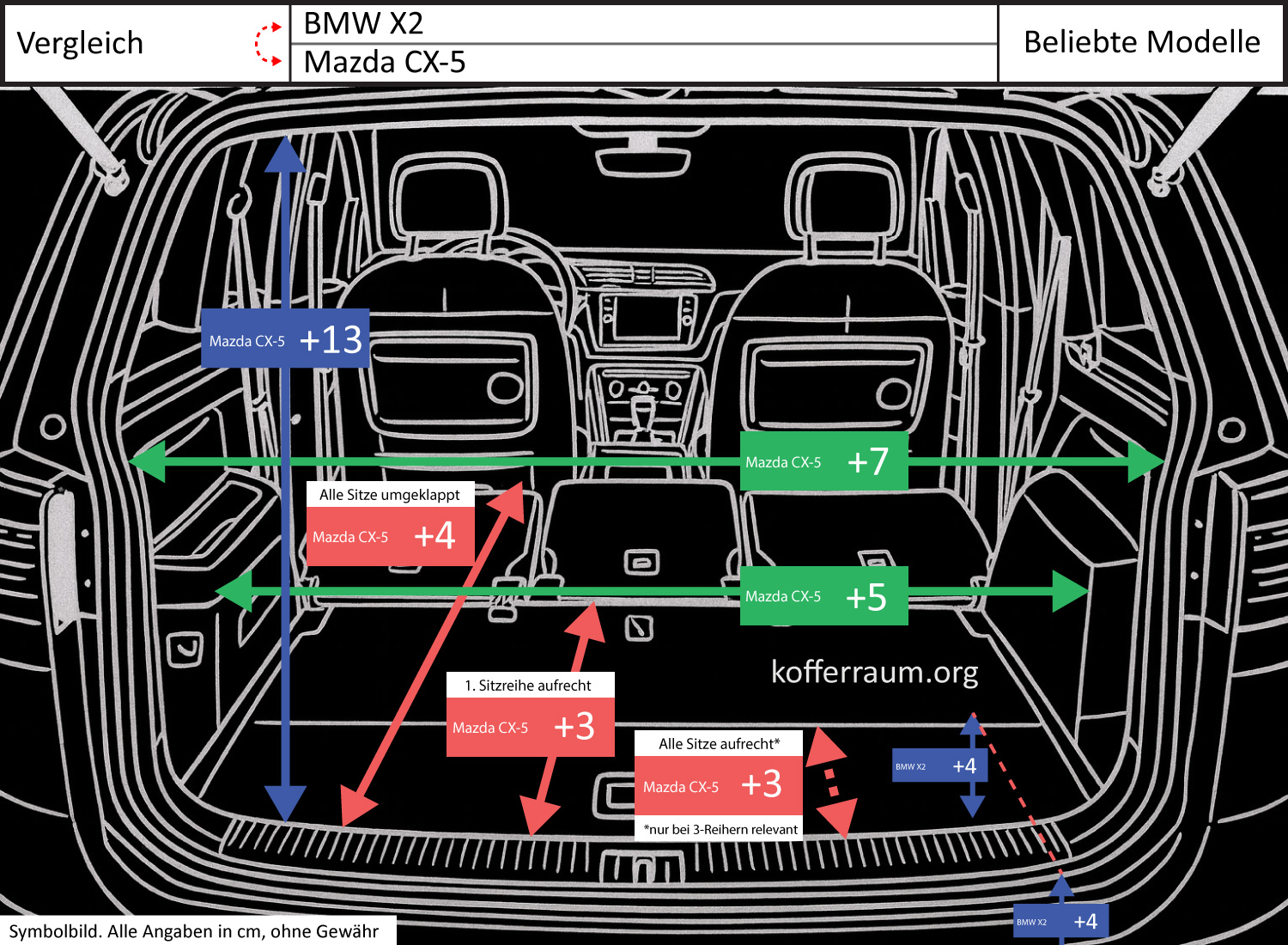
Two differences stand out clearly in the measured values: The height of the trunk opening of the Mazda CX‑5 is +5.1 in (≈20%) larger than that of the BMW X2, and the depth of the trunk (distance from loading edge ↔ trunk floor) of the BMW X2 is +1.6 in (≈80%) greater than that of the Mazda.
Note: Percentage values show the relations; the depth difference is only 1.6 in in absolute numbers but appears very large percentage-wise.
Impact on Usability
A higher trunk opening in the CX‑5 makes loading tall or bulky items easier: furniture pieces, crates, or boxes need to be tilted less and fit more easily through the opening. This is especially practical for large-volume luggage or frequent loading and unloading of bulky shapes.
The greater distance from loading edge to trunk floor in the BMW X2 means the cargo floor lies deeper and cargo disappears further below the loading edge.
This offers advantages when storing items that should not protrude (better visual cover, less wind exposure with open rear) and contributes to a lower center of gravity for the load.
However, the loading edge of the BMW is overall somewhat higher above the road (+1.6 in), which slightly complicates lifting heavy items in.
Other measured differences are significantly smaller (<10%): The CX‑5 has a slightly longer trunk with the first row of seats upright (+1.2 in/3%) and with seats folded down (+1.6 in/2%), a somewhat larger minimum interior width (+2 in/5%), and a wider trunk opening (+2.8 in/7%). These smaller advantages of the Mazda support loading and storing wider objects but are less decisive than the two points highlighted above.
Conclusion: For regular loading of tall or bulky parts, the Mazda CX‑5 is the more practical choice due to the significantly higher opening.
Those who value a deeper cargo floor to store or visually conceal cargo lower down have the advantage with the BMW X2 — though the somewhat higher loading edge of the BMW should be taken into account.