
Trunk comparison: BMW X4 vs Ford Escape


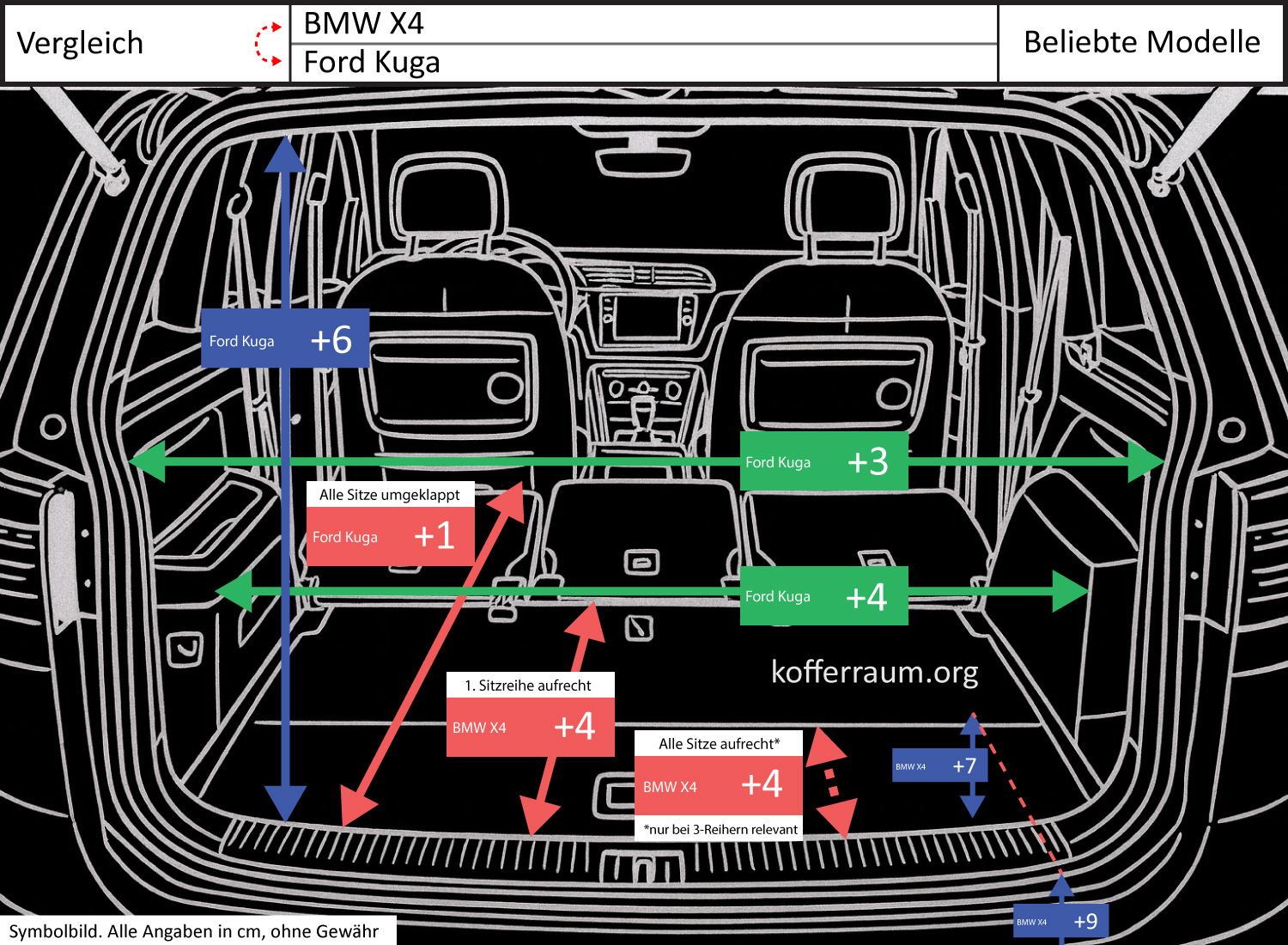
Biggest Differences (highlighted)
Trunk depth: The BMW X4 has a trunk depth between the loading edge and trunk floor that is +2.8 in (≈700%) greater than the Ford Escape. This difference is significant.
Loading edge height: The loading edge of the BMW X4 is +3.5 in (≈13%) higher above the road than the Ford Escape. This deviation also exceeds 10%.
Other, smaller differences
With the seats folded down, the Ford Escape is only minimally longer (+0.4 in / 1%). With the first row of seats upright, the BMW X4 has a trunk that is +1.6 in (4%) longer.
The height of the Ford Escape's trunk opening is +2.4 in (9%) higher (below the 10% threshold). The narrowest trunk width is +1.6 in (4%) larger in the Ford Escape; the width of the trunk opening on the Escape is +1.2 in (3%) larger.
What are the implications of these differences for usability?
The significantly greater depth in the BMW X4 means: more usable interior space behind the loading edge. Bulky or tall luggage can be placed deeper in the cargo area, allowing better stackability and preventing items from protruding over the loading edge.
The higher loading edge in the BMW X4 makes lifting heavy items into position more strenuous—especially with frequent loading (groceries, strollers, furniture). Together with the greater depth, this creates an effect: items must be lifted higher, then lowered further inside.
The Ford Escape offers overall better accessibility for wide and bulky items due to the lower loading edge, slightly higher opening, and somewhat greater width at the narrowest point and at the opening, making handling easier during frequent loading and unloading.
For users who value easy loading (e.g., heavy grocery bags, strollers, frequent loading and unloading), the Escape is more practical.
Conclusion
BMW X4: Better for users who want to benefit from greater interior depth (more stacking space, deeper storage). Drawback: higher loading edge makes handling heavy items more difficult.
Ford Escape: More practical for daily loading due to lower loading edge, larger opening, and slightly more width—better for wide or frequently loaded items. Differences in lengths and widths are overall minor.