
Trunk comparison: Dacia Duster vs Ford Escape

Key Differences and Their Impact
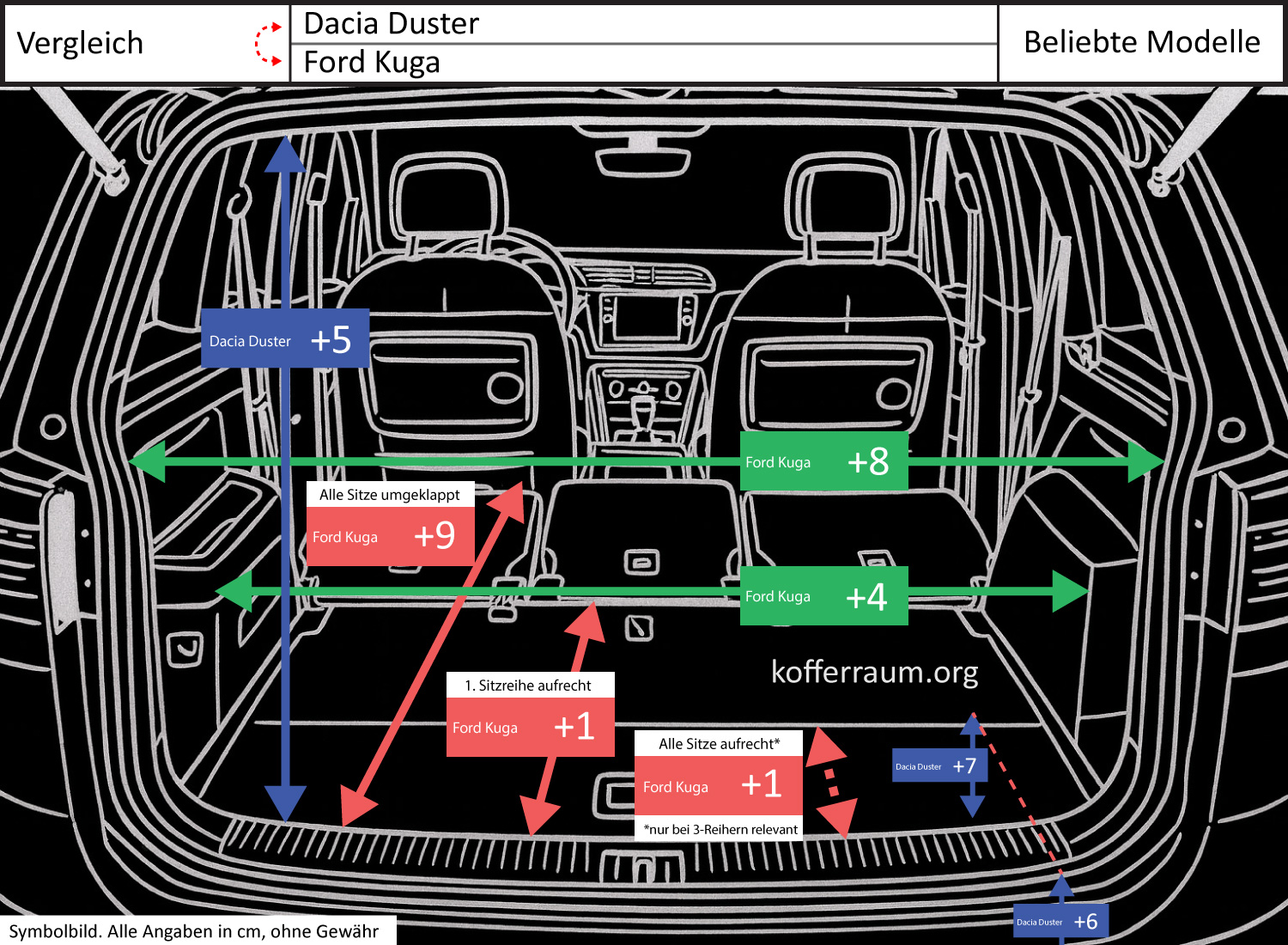
In the present data comparison, one difference stands out clearly: the depth of the trunk (distance from loading edge → trunk floor) is 2.8 in or
greater in the Dacia Duster than in the Ford Kuga. Practically, this means: the Duster has a significantly pronounced recess under the loading edge, which either allows for additional protected storage space below the loading edge or ensures that luggage sits deeper in the vehicle. This can be useful for bulky but relatively flat cargo or for storing items so that the load is less visible. At the same time, a deep recess makes it more difficult to slide large objects directly through. Other, albeit smaller, differences affect usability: the loading edge of the Duster is about 2.4 in higher above the road, which, combined with the greater depth, makes lifting and loading heavy items more cumbersome; the greater opening height of the Duster (+2 in), on the other hand, slightly facilitates loading tall items. The Ford Kuga offers about 1.6 in more width at the narrowest point and an 3.1 in wider trunk opening as well as nearly 3.5 in more cargo length with the seats folded down. This makes the Kuga better suited for wide or elongated items and for easier sliding/pushing when loading. In summary: The Dacia Duster offers a significantly deeper trunk recess (strong percentage difference), which creates storage space below the loading edge but, combined with the higher loading edge, makes handling heavy or very bulky items more difficult. The Ford Kuga is advantageous in width and usable length with folded seats and has a more practical, flatter loading floor that facilitates loading and unloading wider or longer goods.