
Trunk comparison: Hyundai Kona vs Mazda Mazda CX-5

Key Differences
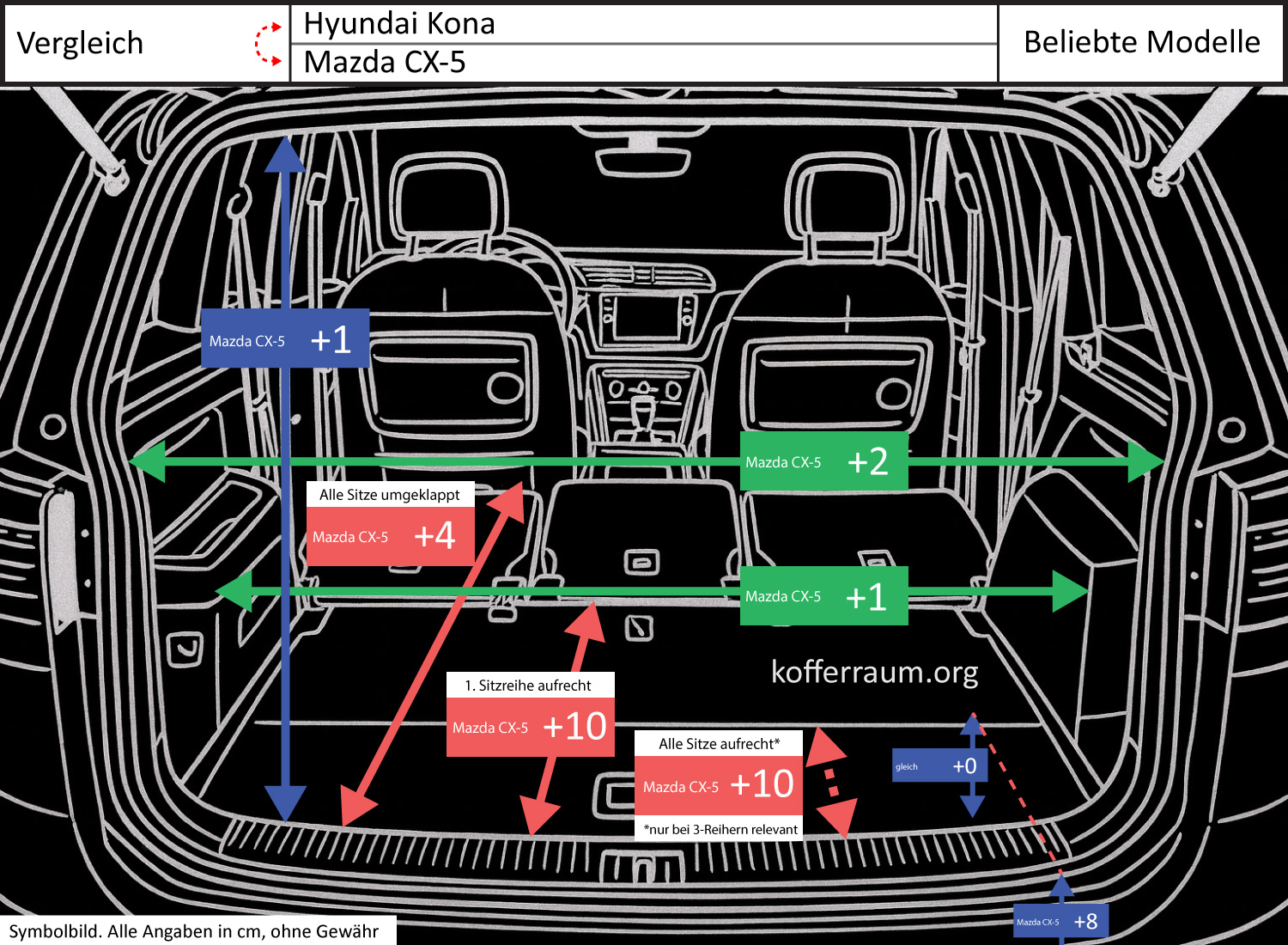
The Mazda CX-5 offers a trunk that is 3.9 in (12%) longer with the front seats upright compared to the Hyundai Kona and also has a loading edge that is 3.1 in (12%) higher above the road. These two differences are the most significant and decisive advantages or disadvantages in everyday use. With all seats folded down, the CX-5 is only slightly longer (+1.6 in / 2%). The height of the trunk opening (+0.4 in / 1%), the width at the narrowest point (+0.4 in / 1%), and the width of the opening (+0.8 in / 2%) are minimally in favor of the CX-5; the depth (loading edge to trunk floor) is the same in both models.
Impact on Usability
The 12% longer cargo space with the front row upright makes the CX-5 better suited for longer items in daily use (e.g., longer boxes, skis with the passenger seat folded down, or longer shopping trips) without having to fold down the rear seats first. This increases practicality for users who frequently transport bulky but not particularly tall cargo. The 12% higher loading edge of the CX-5, on the other hand, makes loading heavy items more difficult: lifting and loading require more effort and can be inconvenient for older people or frequent loading/unloading. The Kona, with its lower loading edge, is more comfortable when loading/unloading heavy luggage or child seats. The other differences (±1–2%) are practically negligible and hardly affect usability. The same depth means that the usable floor area in the longitudinal direction remains comparable when the loading edge is not considered. Conclusion: Those who frequently transport longer items and accept the somewhat higher loading edge benefit from the Mazda CX-5. Those who often lift heavy items or want more comfort when loading have an advantage with the Hyundai Kona.