
Trunk comparison: Kia Ceed vs Mazda Mazda CX-5
Trunk dimensions — key differences
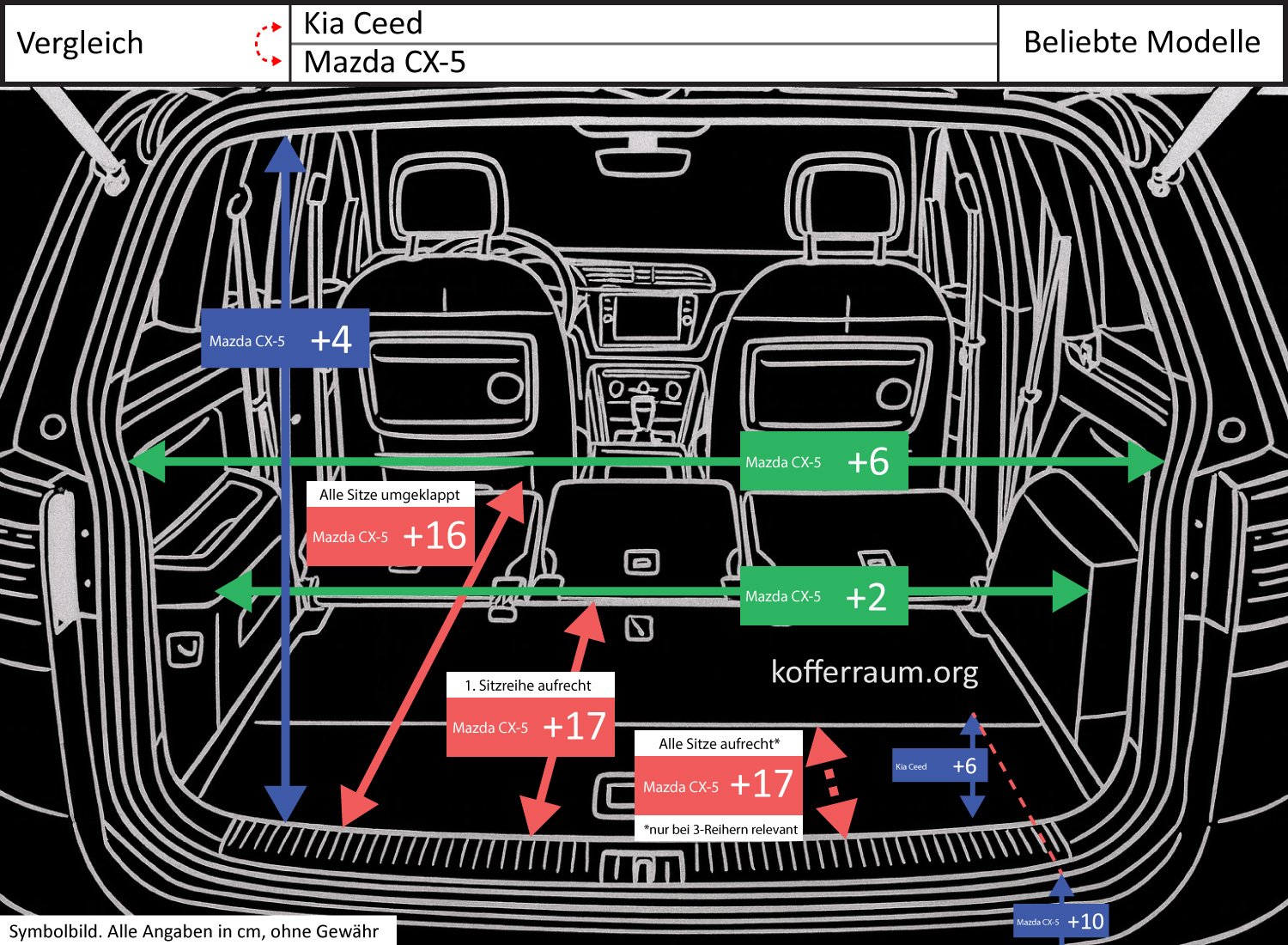
The Mazda CX-5 offers a significantly greater cargo length with the first row of seats upright than the Kia Ceed:
. With the seats folded down, the CX-5's advantage is +6.3 in (10%). The width at the narrowest point and the width of the opening differ only slightly (+0.8 in and +2.4 in, respectively), as does the height of the trunk opening (+1.6 in in favor of the CX-5). Two notable differences favoring the Kia Ceed are the trunk depth (measured from the loading edge to the trunk floor) with
and the significantly lower loading edge: the Mazda's loading edge is
higher above the ground than the Ceed's.
Impact on usability
Because the CX-5 offers more cargo length (especially with the first row upright), it is better suited for longer items and larger luggage that should not be placed crosswise. The slightly wider opening width makes loading wider parts easier. A disadvantage is the higher loading edge of the CX-5: furniture or heavy suitcases must be lifted higher, making loading and unloading more ergonomically demanding. The Kia Ceed, due to its significantly greater depth (trunk floor positioned lower than the loading edge) and the lower loading edge, is overall more comfortable for loading heavy or bulky items. The deeper load floor position also creates a "vertical buffer" where bulky items can sit lower, which offers practical advantages for stackable or voluminous loads. However, the available length is more limited, so very long items are harder to accommodate in the Ceed. In short: CX-5 = better for longer/larger cargo; Ceed = easier, more ergonomic loading and better storage for lower-lying or heavy items.