
Home » Trunk dimensions » BYD
BYD — trunk dimensions
4 models
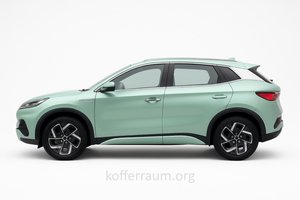
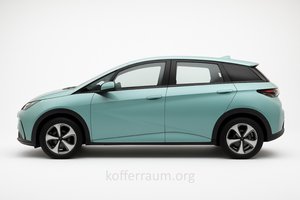
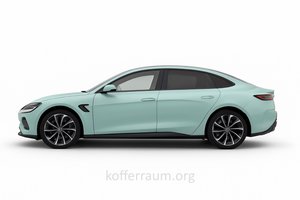
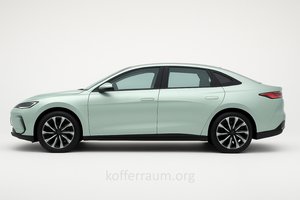
About BYD
BYD (Build Your Dreams) is today one of the most influential players in the global mobility transition. The brand was founded in 1995 in Shenzhen by Wang Chuanfu and started as a battery manufacturer. Vehicle production began in the early 2000s; crucial was BYD's early focus on electric mobility and the consistent vertical integration of the value chain — from batteries and drivetrains to vehicle software and manufacturing.
Technology and Products
BYD has developed a technological lead based on its own batteries (including the "Blade Battery," promoted as safe), proprietary electric motors, power electronics, and increasingly its own semiconductor and software development. The company offers a range of powertrains: pure battery electric vehicles (BEV), plug-in hybrids (PHEV), and the particularly efficient DM-i hybrid system. Platforms like the e-platform and modular architecture facilitate a broad model range from the Dolphin through the popular Atto 3 (Yuan Plus) to the premium Han brand and large SUVs like the Tang.
Market Position and Strategy
In China, BYD is one of the market leaders in New Energy Vehicles (NEV). The company benefits from deep manufacturing capabilities, scalable production capacities, and an extensive sales and service network. For several years, BYD has been expanding internationally: Europe, Latin America, Southeast Asia, and Australia are key markets. The offerings often target very good value for money: modern equipment, attractive ranges, and competitive prices combined with comprehensive safety and battery technology.
Design and User Experience
Early BYD models faced criticism regarding design and interior materials; this has changed significantly. Modern BYD vehicles feature distinctive lines, higher-quality interiors, and digital features such as large displays, over-the-air updates, and extensive driver assistance systems. The brand presentations follow clearer, more emotional designs — necessary to convince buyers in the highly competitive segment.
Opportunities and Challenges
BYD benefits from the global shift toward electric drivetrains, its cost advantages, and control over key components like battery cells. Challenges remain: establishing a strong, trustworthy brand outside China, intense competition from traditional manufacturers and new EV brands, as well as geopolitical and regulatory uncertainties that can affect supply chains and market access. Additionally, expectations for software quality, customer service, and sustainability credentials beyond the battery structure are growing.
Conclusion
BYD has evolved in a short time from a battery manufacturer to a complete automotive group that largely controls technology, production, and sales itself. The combination of innovation-driven battery development, cost-efficient manufacturing, and a broad model portfolio makes BYD a relevant player in global electromobility. Whether the company maintains top positions outside China in the long term depends on brand building, quality perception, and the ability to deliver differentiated customer experiences in mature markets.