
Home » Trunk dimensions » Fiat
Fiat — trunk dimensions
27 models
-
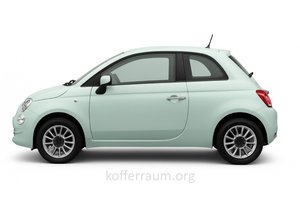 500 Hatchback
 -
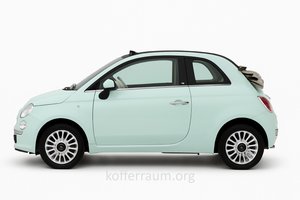 500 Cabrio Convertible
 -
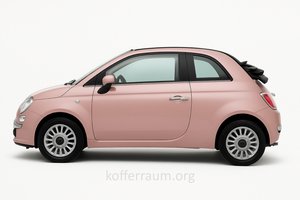 500c Convertible
 -
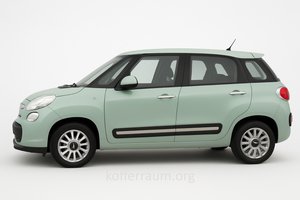 500L Wagon
 -
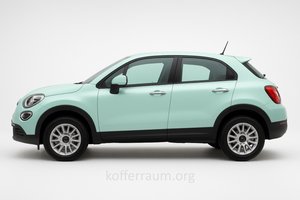 500X SUV
 -
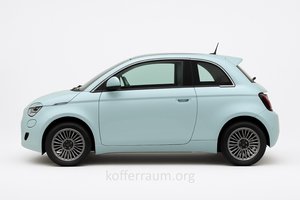 500e Hatchback
 -
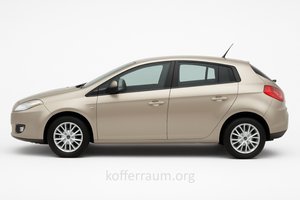 Bravo Hatchback
 -
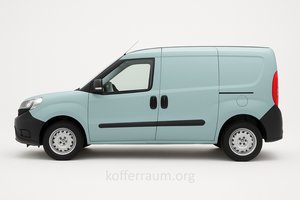 Doblo Van
 -
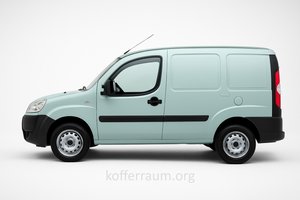 Doblo Active Van
 -
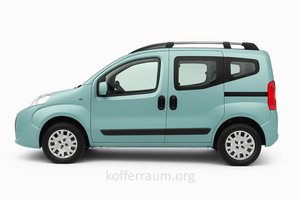 Qubo MPV
 -
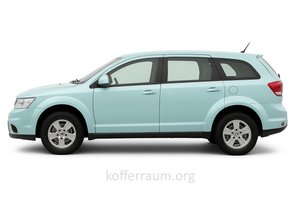 Freemont Urban SUV
 -
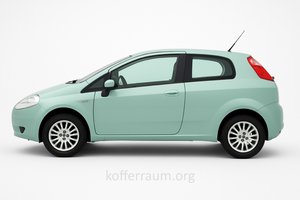 Grande Punto Hatchback
 -
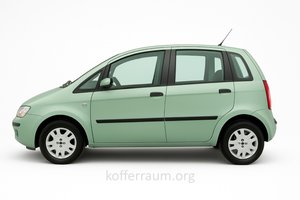 Idea MPV
 -
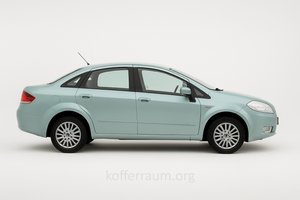 Linea Sedan
 -
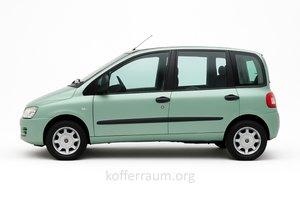 Multipla MPV
 -
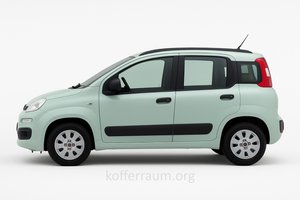 Panda Hatchback
 -
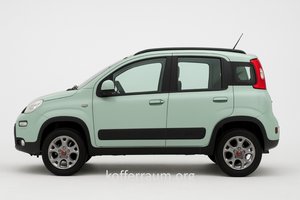 Panda 4x4 Hatchback
 -
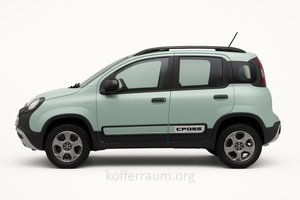 Panda Cross Hatchback
 -
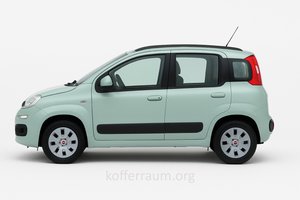 Panda Lounge Hatchback
 -
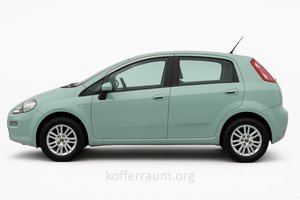 Punto Hatchback
 -
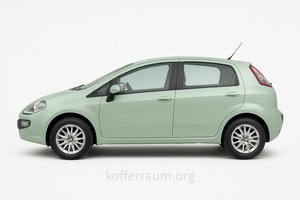 Punto Evo Hatchback
 -
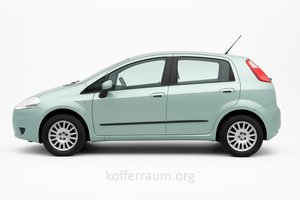 Grande Punto Hatchback
 -
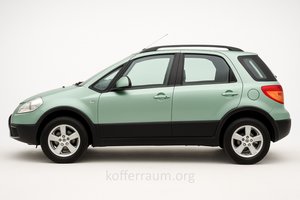 Sedici SUV
 -
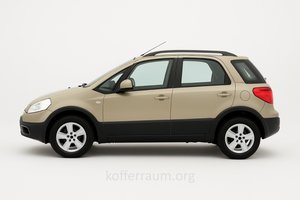 Sedici Multijet SUV
 -
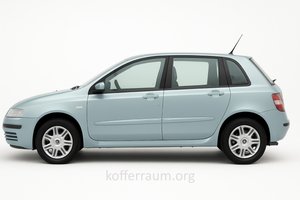 Stilo Hatchback
 -
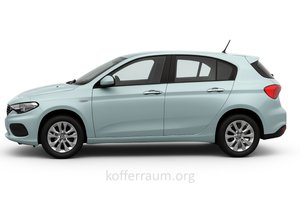 Tipo Hatchback
 -
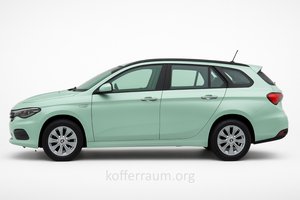 Tipo Wagon Wagon
About Fiat
Fiat is more than just a car brand; it is a piece of Italian everyday culture. Founded in 1899 in Turin as Fabbrica Italiana Automobili Torino, Fiat shaped mobility in Europe for over a century with a focus on compact, affordable vehicles. The brand combines pragmatic engineering with distinctive design and has repeatedly proven that urban mobility can be both stylish and economical.
Historically, Fiat played a leading role in several key phases. During the interwar period and beyond, the company made motorization accessible to the general population. Iconic models like the "Topolino" in the 1930s and later the "Nuova 500" from 1957 symbolized affordable personal transportation and became a reflection of Italy's economic upswing. In the 1980s and 1990s, Fiat solidified its position with the Panda and the Punto—compact, robust cars that were especially appreciated in European cities.
Fiat is closely intertwined with Italian design. Collaborations with Italian design houses such as Pininfarina and Bertone shaped numerous models. The Fiat 500 is the prime example: originally an economical city car, later reintroduced as a retro reincarnation with modern comfort and emotional design. Technically, Fiat often relied on practical innovations: early adoption of front-wheel drive, compact engine concepts like TwinAir, later Multiair technology to improve efficiency, and more recently the electrification of the 500 model.
Fiat is not only a passenger car manufacturer but also a strong player in the commercial vehicle segment. Models like the Ducato, Fiorino, and Doblo are indispensable in Europe, especially for small businesses. The Ducato has been considered a reliable base for delivery vans and camper conversions for decades. This broad portfolio makes Fiat equally present in urban and commercial applications.
From a market strategy perspective, Fiat has undergone several transformation phases. The mergers and partnerships over the years—especially the integration into the Fiat Chrysler Automobiles (FCA) group and later the merger with PSA to form the Stellantis group—changed the brand's direction. Under Stellantis, Fiat benefits from platform and technology sharing, while the brand remains clearly positioned: affordable, city- and family-oriented models with Italian design appeal.
The present is marked by the shift to electromobility. The fully electric Fiat 500e represents an attempt to carry the historic brand image into the future: urban, compact, and emission-free. Challenges remain: increasing competition in the small car segment, CO2 regulations, and changing mobility needs require continuous development.
Culturally, Fiat is deeply rooted. The 500 is not just a car but a lifestyle object; Fiat cars are firmly embedded in literature, film, and everyday imagery. At the same time, the brand stands for a clear promise: functional mobility at an affordable price, combined with Italian design language.
In summary: Fiat remains relevant because the brand preserves proven strengths—compactness, economy, design—and transfers these into new technical contexts. The transformation toward electromobility will be crucial in determining whether Fiat successfully maintains its identity as a city brand in the coming decades.