
Home » Trunk dimensions » Honda
Honda — trunk dimensions
16 models
-
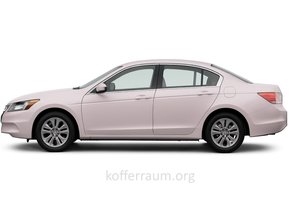 Accord Sedan
 -
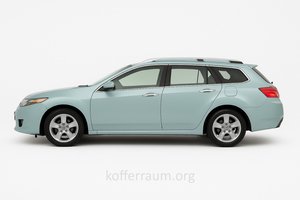 Accord Wagon Wagon
 -
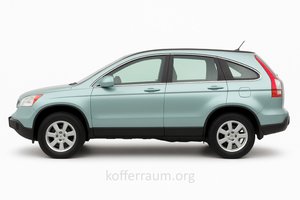 CR-V SUV
 -
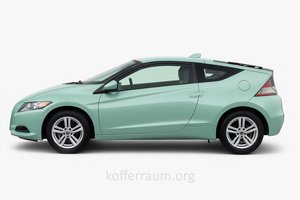 CR-Z Coupe
 -
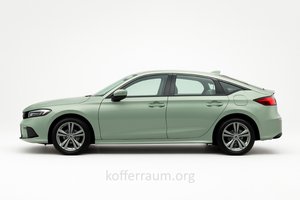 Civic Hatchback
 -
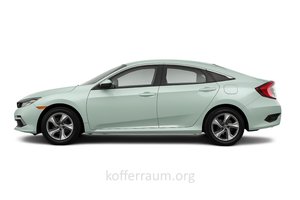 Civic Sedan Sedan
 -
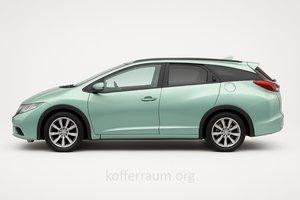 Civic Wagon Wagon
 -
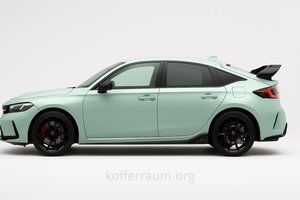 Civic Type R Hatchback
 -
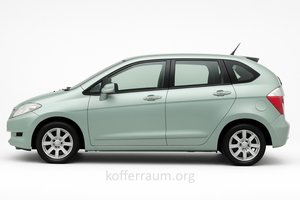 FR-V Minivan
 -
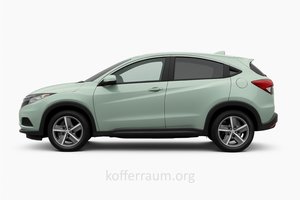 HR-V SUV
 -
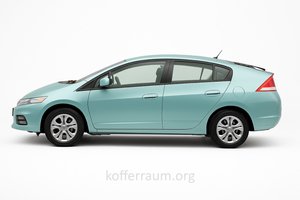 Insight Sedan
 -
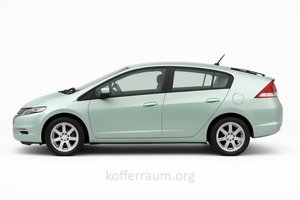 Insight Hybrid Sedan
 -
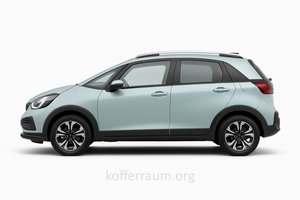 Fit Crosstar Hatchback
 -
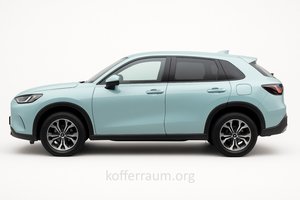 ZR-V SUV
 -
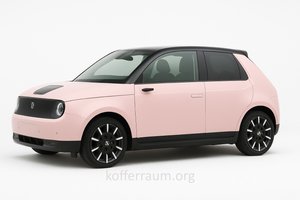 Honda e City car
 -
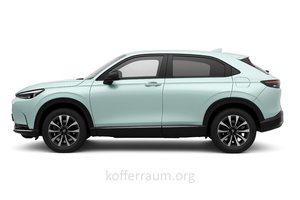 e:Ny1 SUV
About Honda
Honda is one of the most distinctive brands in the automotive world — born from the passion of an engineer and grown into a global mobility company. Founded by Soichiro Honda and Takeo Fujisawa in the late 1940s, the company started with motorcycles and quickly conquered markets worldwide. The transition to passenger cars was consistent: Honda brought technical innovation, lightweight construction, and efficient powertrains to a segment that demanded comfort and everyday usability.
For a long time, the core competency was the compact, efficient engine. Honda made a name for itself with high-revving, smooth-running gasoline engines and the VTEC valve timing system. This technology allowed a combination of strong torque at high RPMs and economical combustion in daily driving. At the same time, Honda demonstrated innovation with early emission solutions like CVCC in the 1970s, which kept the brand competitive even during stricter environmental regulations.
Models like the Civic and Accord shape the brand image. They stand for everyday usability, reliability, and low operating costs — a compact car that combines sportiness and practicality in countless variants. The Accord represents Honda's claim to comfort and long-distance suitability without losing its engineering focus. In the sports segment, Honda made impressive statements with models like the NSX and the S2000: lightweight construction, precise handling, and engine character as emotional components of the brand.
However, Honda is more than just automobile manufacturing. The company operates a broad product range: motorcycles, outboard motors, power generators, and even humanoid robotics (ASIMO) showcase the engineering-driven diversity. Motorsport is another pillar — in Formula 1, the IndyCar series, and motorcycle racing, Honda has achieved numerous successes and transferred technical insights back into production vehicles.
Safety and assistance systems have been significantly expanded in recent years. The Honda Sensing suite bundles adaptive cruise control, lane-keeping assistants, and emergency braking systems, complemented by passive safety concepts like the ACE body structure. This technical approach aims for comprehensiveness: efficiency, protection, and driving dynamics all at once.
The brand is increasingly embracing electromobility and new mobility concepts. Honda invests in hybrid technologies, researches fuel cells, and has formed strategic alliances to accelerate the transition — including partnerships with other manufacturers for electric platforms and battery technologies as well as joint ventures in software and connected services. The goal of significantly reducing CO2 emissions is also part of the long-term planning.
Honda's hallmark: pragmatic innovation. No experiments for the sake of experiments, but technically well-thought-out solutions with clear benefits for drivers and everyday use. In practice, this means solid build quality, low maintenance costs, and a driving character that conveys driving pleasure. For customers who value technology, reliability, and a balanced ratio of efficiency and driving enjoyment, Honda remains a convincing choice — and in the transition to electromobility, a brand that carries its heritage into practical, future-proof concepts.