
Home » Trunk dimensions » Mini
Mini — trunk dimensions
11 models
-
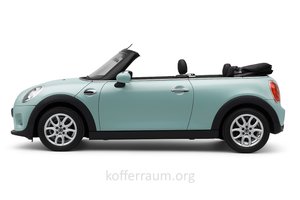 MINI Cooper Convertible Convertible
 -
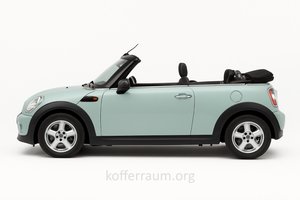 MINI One Convertible Convertible
 -
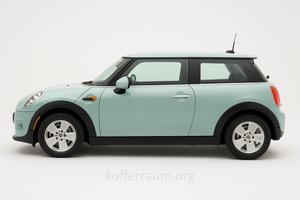 MINI Cooper Hardtop
 -
.jpg) MINI Cooper Hardtop 2 Door Hardtop
MINI Cooper Hardtop 2 Door Hardtop -
.jpg) MINI Cooper Hardtop 4 Door Hardtop
MINI Cooper Hardtop 4 Door Hardtop -
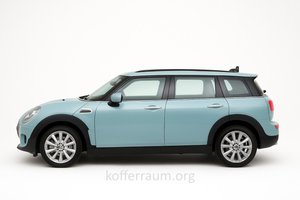 MINI Cooper Clubman Wagon
 -
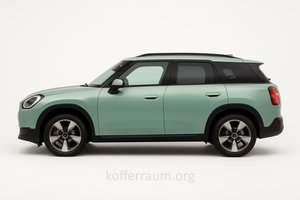 MINI Countryman SUV
 -
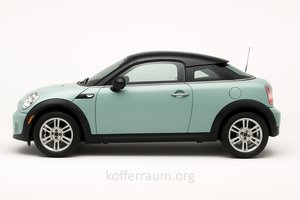 MINI Cooper Coupé Coupé
 -
.jpg) MINI One Hardtop 2 Door Hardtop
MINI One Hardtop 2 Door Hardtop -
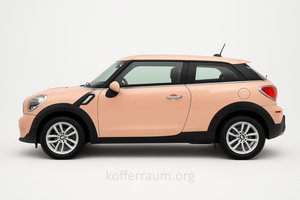 MINI Paceman SUV
 -
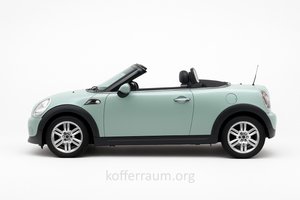 MINI Roadster Convertible
About Mini
Mini is more than just a car; Mini is a concept. Originally designed in 1959 by Alec Issigonis, the Mini quickly became an icon of automotive design: compact, efficient, with a spacious interior relative to its exterior dimensions. Since BMW took over in 2000, Mini has evolved without losing its brand identity. The challenge for the brand has been to unite tradition and modernity — a feat it has largely achieved.
At the core of the brand is the design. The round headlights, short hood, wide wheel arches, and contrasting roof colors are more than styling elements; they are brand signatures. Mini sells emotions: urban lifestyle, driving fun, and individuality. Customers can heavily personalize their vehicle — from trim to seats to roof patterns — making Mini a particularly strong lifestyle product.
Driving dynamics are another pillar. Despite compact dimensions, modern Mini models offer surprising performance. The chassis is firm, the steering direct. Especially in corners, the Mini shows agility that often provides more driving pleasure than many larger competitors. Drivers who value precise handling and spontaneous acceleration will find a suitable offering in the Mini. At the same time, BMW has improved suspension and comfort for everyday use, making the Mini suitable both for city driving and longer trips.
Technically, Mini has made great strides. Modern infotainment systems, driver assistance, and connected services are available as standard or options. Electrification is particularly relevant: with the Mini Electric, the brand demonstrated how urban driving works with locally emission-free propulsion. Electric Minis offer instant torque, quiet operation, and relatively low operating costs — ideal for city commuters. BMW plans to further advance electrification and significantly electrify the model range in the coming years.
The model range today is broader than in the early years under BMW: from the classic three-door to the Clubman, the Countryman, and the fully electric Mini Cooper SE, the brand covers various segments. The Countryman is the largest model and appeals to customers seeking more space and everyday practicality. Smaller models remain the core and cater to the need for compactness and agility.
Mini positions itself between premium brands and mainstream. Prices are above most small cars, justified by quality, equipment, and the brand name. For many buyers, Mini is an emotional product: the high recognition value and the community around the brand create loyalty and brand attachment. At the same time, Mini faces challenges: increasing competition in the compact premium segment, rising emission requirements, and the need to keep up technologically.
Looking to the future, Mini remains relevant through electrification, digitalization, and customizability. If Mini consistently combines these elements with what makes the brand unique — compact proportions, distinctive design, and dynamic driving behavior — it has a good chance of remaining a key player in the urban mobility market. In short: Mini is a brand that connects tradition and modernity, delivering both emotion and everyday usability.