
Home » Trunk dimensions » Nissan
Nissan — trunk dimensions
26 models
-
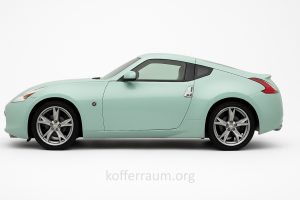 370Z Coupe
 -
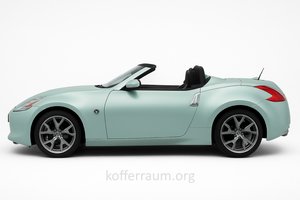 370Z Roadster Convertible
 -
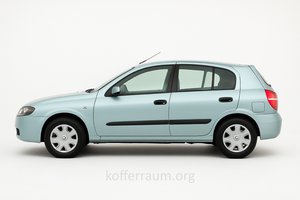 Almera Hatchback
 -
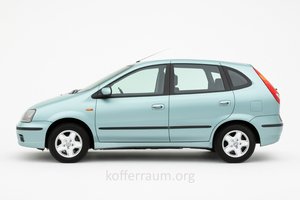 Almera Tino Minivan
 -
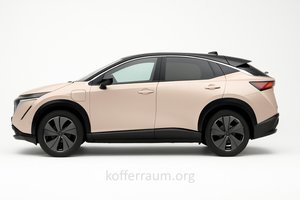 Ariya SUV
 -
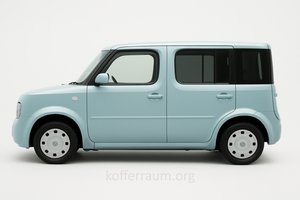 Cube Kaado Minivan
 -
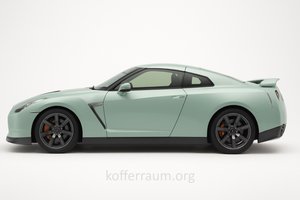 GT-R Coupe
 -
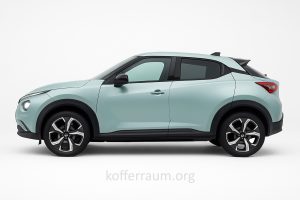 Juke Subcompact SUV
 -
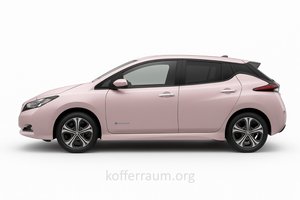 LEAF Hatchback
 -
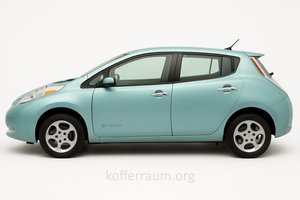 LEAF Zero Hatchback
 -
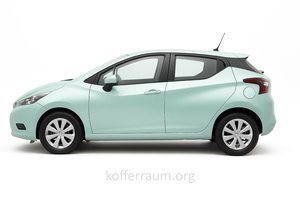 Micra Hatchback
 -
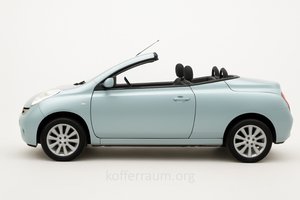 Micra C+C Convertible
 -
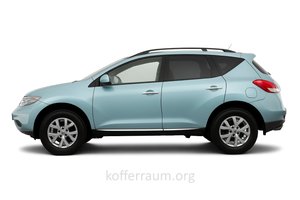 Murano SUV
 -
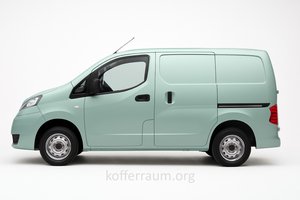 NV200 Van
 -
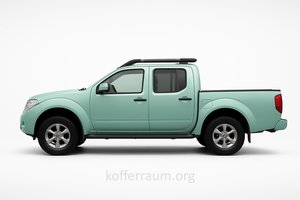 Frontier Crew Cab Pickup
 -
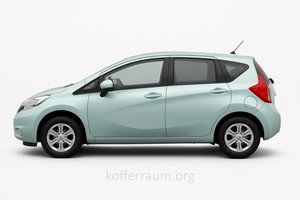 Versa Note Hatchback
 -
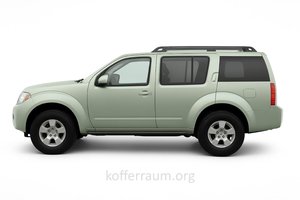 Pathfinder SUV
 -
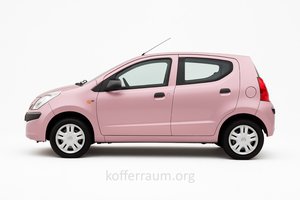 Pixo City car
 -
 Primastar Van
 -
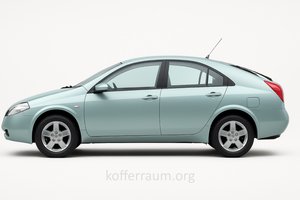 Primera Hatchback
 -
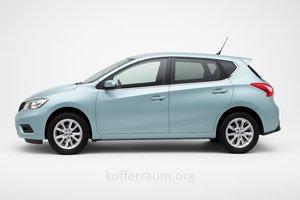 Pulsar Hatchback
 -
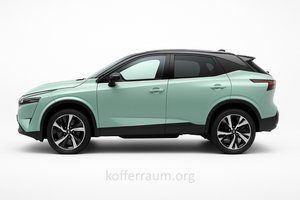 Rogue Sport SUV
 -
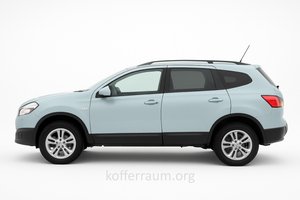 Rogue Sport+2 i-Way SUV
 -
 Versa Hatchback
 -
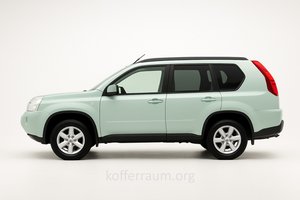 Rogue SUV
 -
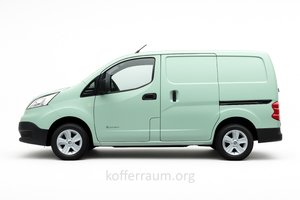 e-NV200 Van
About Nissan
As one of the most well-known car manufacturers worldwide, Nissan represents a blend of technology, everyday practicality, and motorsport ambition. Founded in the early 20th century, the brand has repeatedly demonstrated its ability to operate both practically and innovatively across various segments. The lineup ranges from compact city cars to high-performance vehicles, with clear focuses on electric mobility, driver assistance, and distinctive design.
Nissan made its breakthrough in electric mobility with the Leaf, one of the first mass-market electric cars. The Leaf brought electric drivetrains from a niche product to the mass market and is still considered a milestone for affordable electric mobility. At the same time, Nissan is advancing an alternative hybrid solution with its e-POWER technology, where a combustion engine acts as a generator and the wheels are driven purely electrically. This technology combines the responsiveness of electric motors with the range confidence of combustion engines.
Beyond everyday technology, Nissan showcases its technical expertise in the performance sector: the GT-R is an iconic supercar that has stood for technological advances and racing success for decades. NISMO, the performance and motorsport division, transfers racing know-how into production models, giving these vehicles enhanced driving dynamics and precision. The brand’s design is also distinctive: the V-Motion grille, sculptural body surfaces, and a clear design language ensure recognition across all classes.
In the area of safety and assistance systems, Nissan relies on modular solutions like ProPILOT, which enable semi-automated driving in everyday situations. Driver assistance packages combine adaptive cruise control, lane-keeping aids, and safety functions to provide practical support in daily traffic. These systems aim to increase comfort and reduce accident risk without relieving the driver of responsibility.
Globally, Nissan operates through multiple production sites and is part of the alliance with Renault and Mitsubishi. This cooperation enables shared platforms, efficient development, and economies of scale, which are especially important for electrification and new platforms. At the same time, Nissan remains strongly positioned in many regions with independent models: Qashqai and Juke shape the crossover segment, while pickups like the Navara and capable SUVs like the Patrol are in demand in other markets.
Looking ahead, Nissan positions itself with strategic goals for CO2 reduction and an electric product offensive. With Ambition 2030 targets, new EV platforms, and investments in software, the brand aims to expand its role as a technology-driven manufacturer. For customers, this means a broad model range, technical innovations, and a brand that connects tradition and the future.
Furthermore, Nissan places great value on customer orientation: a dense dealer network, attractive financing offers, and a broad accessory program are designed to simplify purchase and ownership. Used cars from the brand often retain solid value, especially popular models like the Qashqai or Navara. Infotainment and connectivity solutions such as NissanConnect integrate smartphone functions, navigation, and online services, linking everyday life and mobility digitally. At the same time, Nissan invests in battery recycling and more sustainable production processes to improve the ecological footprint of its vehicles. Regional adaptations of models and powertrains demonstrate Nissan’s ability to address different markets—from economical city cars for Europe to robust pickups for Australia and South America. Overall, Nissan remains a brand that combines technical experimentation with market-ready implementation: reliable everyday cars, bold electrification strategies, and a performance DNA that precisely summarizes the brand’s range.
For buyers, this means everyday usability, technical innovation, and emotional design. Nissan thus remains a reliable, future-oriented, and attractive brand choice with a clear focus on sustainability.