
Home » Trunk dimensions » Toyota
Toyota — trunk dimensions
28 models
-
 Corolla Compact car
 -
 Corolla Wagon Wagon
 -
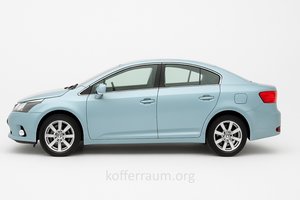 Avensis Sedan
 -
 Avensis Wagon Wagon
 -
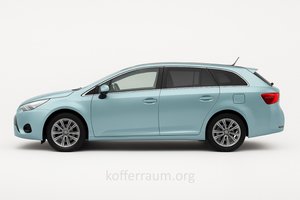 Avensis Touring Sports Wagon
 -
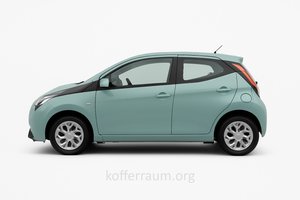 Aygo City car
 -
 Aygo X City car
 -
 C-HR Subcompact SUV
 -
 Camry Sedan
 -
 Corolla Sedan/Hatchback
 -
 Corolla Cross Compact SUV
 -
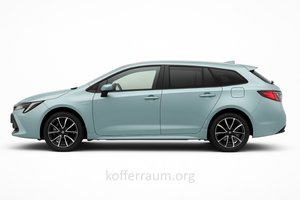 Corolla Wagon Wagon
 -
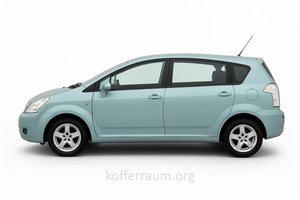 Corolla Verso Minivan
 -
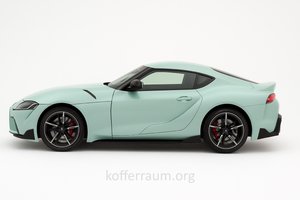 GR Supra Coupe
 -
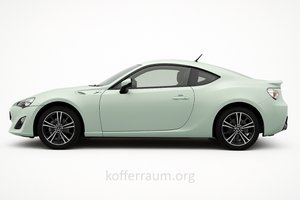 86 Coupe
 -
 Highlander SUV
 -
 Land Cruiser SUV
 -
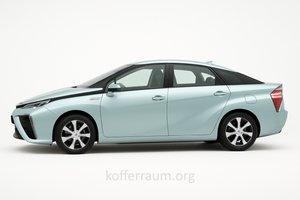 Mirai Sedan
 -
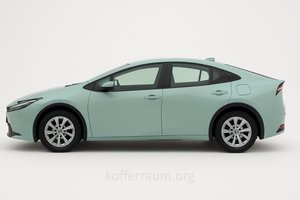 Prius Hatchback
 -
 Prius v Wagon
 -
 Proace Van
 -
 RAV4 SUV
 -
 Urban Cruiser SUV
 -
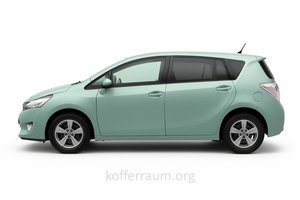 Verso Minivan
 -
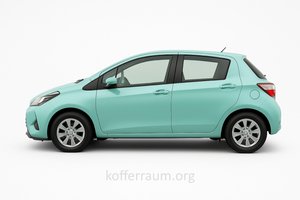 Yaris Subcompact car
 -
 Yaris Verso Minivan
 -
 bZ4X Compact SUV
 -
 iQ City car
About Toyota
Toyota is one of the most well-known and influential automotive brands in the world. Founded in 1937 in Japan, the company has evolved from a local vehicle manufacturer into a global mobility corporation. Toyota stands for reliability, efficiency, and pragmatic technology — values reflected in its product range, manufacturing philosophy, and corporate strategy.
A central element of Toyota's success is its production system. The Toyota Production System (TPS), often equated with Lean Manufacturing, has set standards in quality, cost control, and flexibility. Principles such as Just-in-Time, Kaizen (continuous improvement), and Jidoka (automation with a human touch) minimize waste and increase product quality. This culture permeates not only factories in Japan but also plants worldwide and shapes expectations for efficient mass production.
Toyota's product portfolio ranges from compact cars to heavy-duty vehicles, with a strong presence in the hybrid market. The Prius, introduced in 1997, was one of the first mass-market hybrids and symbolizes Toyota's pioneering role in electrification. Today, Toyota offers hybrids in nearly every segment and simultaneously invests in plug-in hybrids, battery electric vehicles (BEVs), and fuel cell vehicles (FCEVs). The Mirai, a fuel cell sedan, demonstrates Toyota's commitment to hydrogen as an energy carrier, especially for long-distance applications and heavy transport.
Reliability and value retention are other hallmarks. Toyota models are often regarded as durable and low-maintenance, which is reflected in high resale values and strong customer ratings. This reputation results from conservative yet robust technology, extensive field testing, and stringent quality control.
In the field of innovation, Toyota operates not only with vehicles but also with system solutions. The company develops software, connectivity solutions, and mobility services to address urban traffic challenges. Collaborations with technology partners and investments in startups aim to test new business models such as carsharing, autonomous driving functions, and energy integration.
Motorsport and performance also play a role in Toyota's brand image. Whether rally, endurance racing, or Formula 1 (in past and recent engagements), motorsport serves as a laboratory for high-performance development and strengthens the sporty image. Models like the Supra show that Toyota can offer driving enjoyment alongside practicality.
Sustainability is an increasing focus. Toyota pursues ambitious goals to reduce CO2 emissions over the entire vehicle lifecycle and works on circular economy concepts for batteries. The strategy combines short-term measures (e.g., efficiency improvements) with long-term technologies such as solid-state batteries and hydrogen infrastructure.
Criticism sometimes targets the conservative approach and the slow transition to fully electric models compared to some competitors. Nevertheless, Toyota's strength remains the combination of technical reliability, global production expertise, and a broad model lineup.
In summary: Toyota stands for solid technology, efficient production, and continuous innovation. The brand offers vehicles for pragmatic buyers, fleet operators, and tech-savvy customers alike. With a balanced strategy between proven solutions and innovation, Toyota aims to remain a leader in a rapidly changing automotive world.